
Reviewed · AJLOUN CASTLE TOURS
Trip to Jerash, Ajloun and Umm Qais
Three stops. One big Roman and Crusader story.
This private outing is a strong way to see Jordan beyond Amman, with Jerash doing the heavy lifting on Roman scale and private tour time keeping things easy and flexible. I like that the day is paced with distinct, high-impact stops, not one endless bus ride after another, and I like that you get pickup plus free Wi-Fi in the vehicle so the ride feels connected rather than stressful.
The main consideration: entrance fees are not included, so you should plan for extra cash on the ground, and the driver is not the on-site guide at each ruin (though you can ask for local guidance at the entrances if you want).
In This Review
- Quick Hits You Can Plan Around
- Price and What $230 Per Group Really Buys You
- Pickup, Mobile Ticket, and the Comfort Stuff That Matters
- Jerash Ruins: From Hadrian’s Arch to the North Theatre
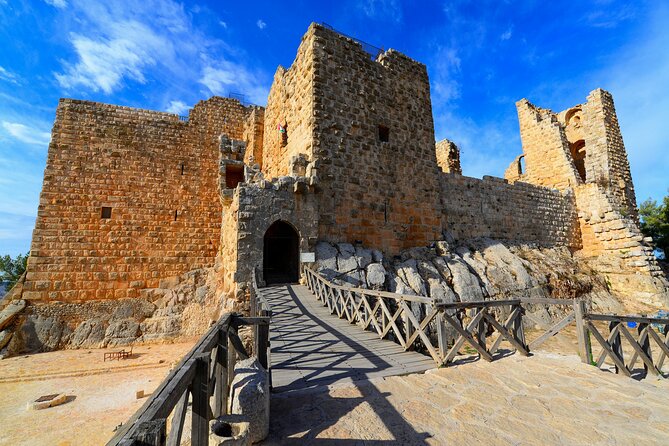
- Ajloun Castle: A 12th-Century Fortress with Big-View Payoff
- Umm Qais (Gadara): Roman Theater, Byzantine Church, and The Big Outlook
- Timing: How an 8 to 12 Hour Day Stays Manageable
- Entrance Fees: The Only Extra Cost You Can’t Ignore
- Guides, Drivers, and How to Get Better Explanations on Demand
- Who This Tour Fits Best
- The Service Level You’re Likely to Feel in the Car
- Should You Book This Jerash, Ajloun, and Umm Qais Tour?
- FAQ
- What time does the tour start?
- How long is the tour?
- Is pickup offered from Amman?
- Is this a private tour?
- Are entrance fees included in the price?
- Is there Wi-Fi during the drive?
- Is the driver also the guide on-site?
- What if the weather is poor?
Quick Hits You Can Plan Around

- Jerash in real walking mode: expect a long, classic route through arches, plazas, temples, theaters, and museum time.
- Ajloun Castle views that pay off: the castle stop is short but built for panoramic payoff and Crusades-era atmosphere.
- Umm Qais gives you both ruins and viewpoints: Roman theater, Byzantine church, museum, plus dramatic lookout time.
- Private group logistics: up to four people per group, so your schedule stays calmer.
- Drivers praised for friendliness and punctuality: names like Bassam, Haroun, and Aneese come up in service feedback.
- On-site guiding is optional: the driver handles driving, and you can request a guide at the sites if you want.
Price and What $230 Per Group Really Buys You
At $230 per group (up to 4 people), this is priced like a private day trip, not a cheap shared scramble. If you fill the group, the math works out to about $57.50 per person. That is often the sweet spot for places like Jerash and Umm Qais, where you want comfortable transit and enough time to actually see things.
You should still budget for entrance fees because they are paid directly at each site. That means your final day cost is predictable, but not included in the base price. If you are trying to travel on a strict budget, this is the one line item you cannot ignore.
Duration is listed as 8 to 12 hours, and that range matters. Jerash alone is a 5-hour block, and it typically eats more time than people expect once you start walking the colonnaded street and pause for photos in the theaters and plazas. If you do Jerash like a checklist, you will feel rushed. If you do it like a wander, the clock starts feeling like it is on your side.
More Umm Qais trips:
- Full-Day Tour: Umm Qais, Jerash, and Ajloun from Amman
★ 5.0 · 162 reviews - Jerash, Ajloun, Umm Qais Day Trip
★ 5.0 · 99 reviews - From Amman: Private Jerash, Ajloun Castle, and Umm Qais Tour
★ 4.9 · 82 reviews
Pickup, Mobile Ticket, and the Comfort Stuff That Matters
This is a private tour/activity, and pickup is offered, which is a big deal in Amman. You avoid the part where you have to figure out timing, taxis, or who is meeting whom. The tour also includes free Wi-Fi in the vehicle, plus you get a mobile ticket.
Those details might sound small, but they add up on a day that can run long. Wi-Fi helps you check opening hours, map directions once you’re dropped, or share a quick status update with friends back home. Mobile tickets cut down on time at whatever point you validate or start the day.
Meeting starts at 8:00 am. That is early enough to take the edge off the day, especially if you are combining sun-heavy ruins with lookout time at Umm Qais and hilltop walking around Ajloun Castle.
Jerash Ruins: From Hadrian’s Arch to the North Theatre
If Jerash is your main target, you picked wisely. This is one of the best-preserved Roman cities you’ll see in the region, and the big advantage here is that the main monuments are laid out in a way that feels walkable as a sequence.
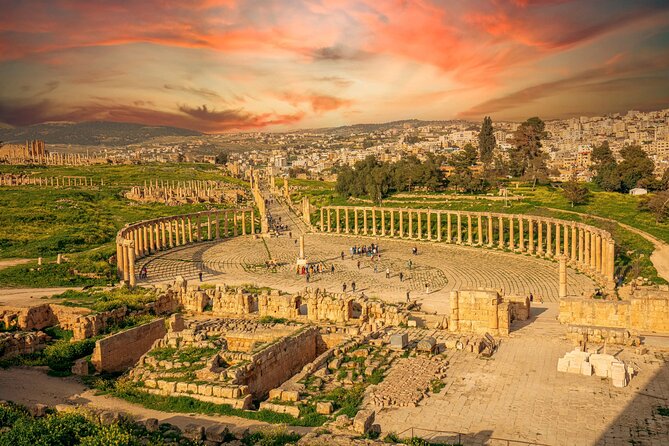
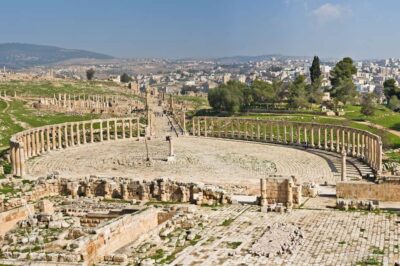
You start with Hadrian’s Arch, a classic entrance marker that signals you are stepping into a planned city space rather than just ruins scattered around. From there, you move into the Oval Plaza, which is the kind of open area that helps you orient yourself before the walk becomes more detailed.
Next comes the Temple of Artemis. It’s the sort of stop that makes you stop saying Roman ruins and start saying Roman city planning. The scale and layout remind you these were civic places, not just temples.
Then you hit the theaters. The South Theatre is one of the key moments in the Jerash circuit, and the North Theatre rounds out the experience. If you enjoy watching how ancient spaces were designed for crowds, these theater stops do real emotional work. Even if you only stay a few minutes, the geometry makes sense fast.
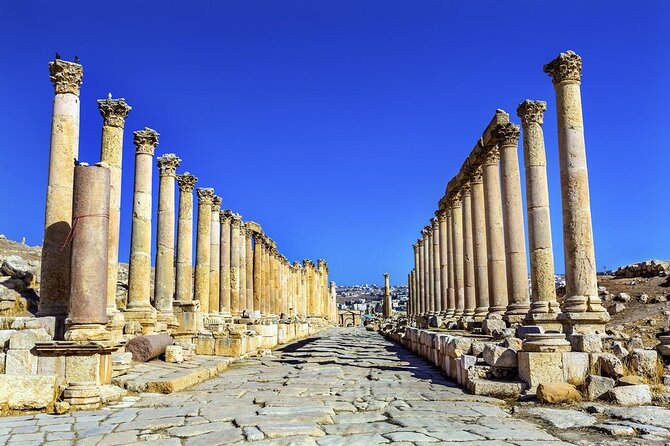
Between the showstoppers, you’ll pass through the Colonnaded Street and smaller but meaningful stops like the Nymphaeum and the Temple of Zeus. The Colonnaded Street is where you get that long, rhythmic feeling of walking a Roman boulevard. It’s also where you learn how Jerash can feel both grand and intimate, because you are moving at human speed.
You also have a Byzantine Church included in the route. That addition matters because it shows how the site lived on after the Roman period. It is a reminder that Jordan’s past does not switch off cleanly at one date.
Finally, you include time at the Jerash Archaeological Museum. A museum stop is not always popular on a day trip, but here it pays off because it helps you recognize what you just walked through. You end with a clearer sense of what you saw, not just images.
What I like about the Jerash block
You get a long 5 hours for this stop, and that means you can do it your way: slower for photos, quicker if you’re focused on the big monuments. It’s enough time to take breaks without feeling like you’re surrendering the day.
What to watch for
Jerash is a ruin day, meaning it can involve steady walking and uneven footing. Wear comfortable shoes you trust. Also, because entrance fees are separate, decide ahead of time if you want to linger in the museum or keep the flow focused on the streets and theaters.
Ajloun Castle: A 12th-Century Fortress with Big-View Payoff
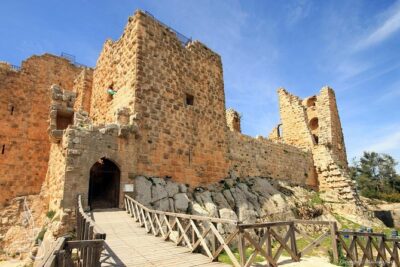
Ajloun Castle (Qala’at Ar-Rabad) is a different kind of stop than Jerash. Jerash is about Roman urban design. Ajloun is about a fortress, with views and defensive purpose baked into the experience.
You get about 2 hours here, which is a very reasonable amount of time for a castle visit. This duration gives you space to walk the main areas, pause for photo angles, and still have enough energy for the later viewpoint time at Umm Qais.
The castle itself dates to the 12th century, and it is tied to the Crusades era. Even without a long lecture, the setting makes the story feel physical. You are high enough to understand why fortifications mattered, and you can read the geography like the builders did.
The best part is the panoramic views. You feel the distance. You see why this place mattered for surveillance and control, not just drama.
A practical way to enjoy Ajloun more
Since the driver is not the on-site guide at each location, plan to ask for a guide if you want the historical context beyond what you can pick up visually. The option to request guidance at the entrance is helpful if you care about dates, factions, and why particular walls or towers were built.
What to watch for
Ajloun is still a walk and climb environment. If you know stairs or uneven surfaces bother you, this might be the stop where you want to take it slow.
More Ajloun Castle trips:
- Private Tour of Ajlun and Jerash
★ 5.0 · 130 reviews - Jerash, Ajloun, and Umm Quais Full-Day Tour
★ 5.0 · 78 reviews - From Amman: Private Full Day Tour Jerash Ajloun & Um Qais
★ 5.0 · 77 reviews - One Day Trip to Jerash & Ajloun Castle
★ 5.0 · 57 reviews
Umm Qais (Gadara): Roman Theater, Byzantine Church, and The Big Outlook
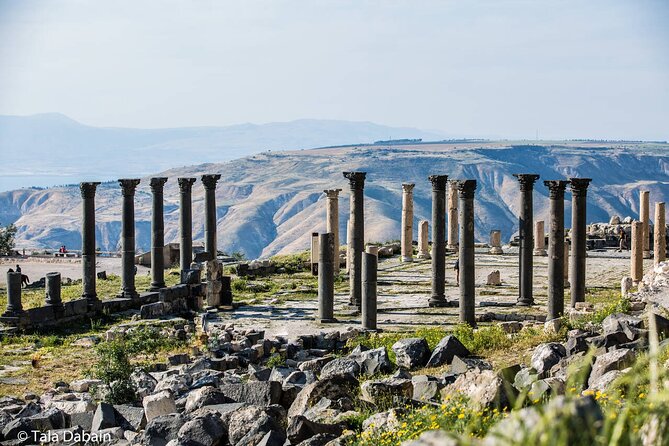
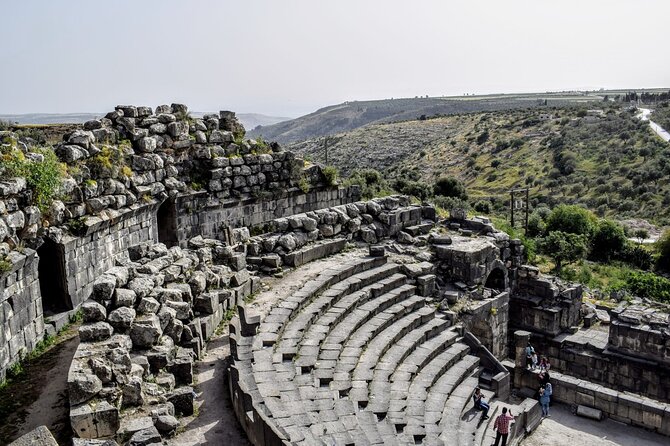
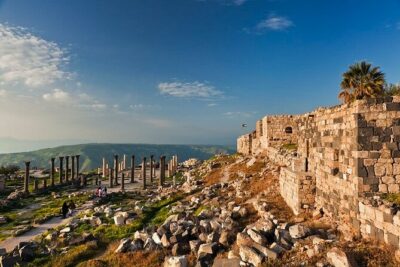
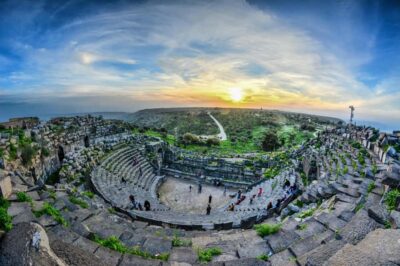
Umm Qais is one of those sites where the ruins and the views are inseparable. Gadara’s Roman theater is the main headline, and you’ll also see a Byzantine Church and other remnants including a colonnaded street and archaeological museum time.
The route includes a viewpoint stop, which is where the day clicks into place. From there, you get a sweeping sense of the region, including views toward the Golan Heights and the Sea of Galilee. That viewpoint time is short by design, about 1 hour total for the Umm Qais stop, so come ready to enjoy it without trying to cover every inch.
There are also Ottoman-era buildings and black basalt structures. Those are great for people who like texture and material. Black basalt gives the ruins a different visual weight than limestone, and it’s one of the reasons Umm Qais feels distinct compared to other Roman sites.
You also have time to look across farmed areas and fields in the surrounding countryside. It’s a good end-of-day contrast to Jerash’s big city feel and Ajloun’s fortress mood.
Why I think Umm Qais is worth making room for
A lot of one-day trips in Jordan try to do too much, so they skip the place where the views do the storytelling. Umm Qais does not feel like a side quest. It feels like a payoff.
What to watch for
Because this is the final stop, you will likely be tired. Keep expectations realistic, and don’t try to photograph every wall at knee level. Focus on the theater and the viewpoint, then sprinkle in the museum and basilica-style church remains if your legs still want more.
Timing: How an 8 to 12 Hour Day Stays Manageable
This day runs long enough to feel like a full experience, but it is structured so you are not stuck in transit the entire time. Jerash is 5 hours, Ajloun is about 2 hours, and Umm Qais is around 1 hour. That adds up to 8 hours of site time, then you layer in driving and real-world pauses.
Starting at 8:00 am helps. You get daylight for hilltop views and you reduce the chance of rushing through something important because you ran late.
One thing I appreciate: the driver is not the guide at the sites. That keeps the pace freer for you. If you want a deeper explanation, you can ask for a guide at the entrance where you are standing. If you do not want that, you still get a clear route without being pulled into a scripted monologue.
Entrance Fees: The Only Extra Cost You Can’t Ignore
Entrance fees must be paid directly at the sites. That affects your planning more than you might think, because this tour includes three separate areas and a museum stop in at least two of them.
Before you go, I suggest you set a simple mental budget for entrances so you are not surprised mid-day. If you’re traveling with a group of four, do the quick math and decide how you want to split costs.
The upside is that entrance fees can feel more fair when you can see what you’re paying for in real time. You are not donating money to a mystery. You’re funding access to specific monuments and museum collections you can actually touch with your own eyes.
Guides, Drivers, and How to Get Better Explanations on Demand
A lot of tours promise expertise but still limit your control over how you learn. Here, the driver is there for transportation, and you can ask for a guide at the entrance if you need one.
This setup is helpful if you are flexible. You can go self-guided for the parts you enjoy most, then bring in a local guide for the section where you want the historical thread tied up.
It also aligns with the style of day that fits many visitors. Jerash is visually dramatic enough that you can enjoy it even without a long talk. Ajloun can reward extra context, especially if you care about the Crusades era details. Umm Qais benefits from someone explaining what you are seeing in the view.
Who This Tour Fits Best
This tour is a strong match if you want an efficient day covering three major stops: Roman Jerash, Crusades-era Ajloun Castle, and Umm Qais with its outlooks toward the Golan Heights and Sea of Galilee.
It is also a good choice for:
- Families and small groups of up to four that want private pacing.
- People staying in Amman who want to skip the hassle of multiple taxi hires.
- History lovers who like Roman city planning but also want a fortress and a viewpoint stop.
Most travelers can participate, but keep in mind you will be walking around ruins and castle areas. Comfortable shoes matter more than fashionable ones.
The Service Level You’re Likely to Feel in the Car
One of the most consistent strengths of this experience is the human side of the driving service. Feedback highlights drivers who are friendly, warm, and professional, with names like Bassam, Haroun, and Aneese repeatedly associated with great communication and on-time service.
That matters because you are spending a big chunk of the day away from your hotel. A calm, helpful driver reduces decision fatigue. It also helps when your day runs slightly off schedule because you lingered at a theater or took extra time at the museum.
And the fact that the driver provides the transport, with the option to bring in on-site guidance, keeps the day from feeling overly scripted.
Should You Book This Jerash, Ajloun, and Umm Qais Tour?
Book it if you want one private day that hits three high-impact Jordan stops without turning the day into a logistics test. The value is strong for groups up to four at $230 per group, and the pacing makes sense: a long Jerash block, a focused Ajloun Castle visit, then Umm Qais for ruins plus outlook time.
Skip or reconsider if you are very entrance-fee sensitive, because fees are paid directly at the sites and your total day cost will be higher than the base price. Also reconsider if you dislike walking on uneven ruin surfaces or you know hilltop stops are tough for you.
If you care about balancing big Roman scenes with a fortress and a viewpoint finish, this is an easy yes. It is practical. It is organized. And it gives you three different ways to understand Jordan in a single day.
FAQ
What time does the tour start?
The tour starts at 8:00 am.
How long is the tour?
It lasts about 8 to 12 hours.
Is pickup offered from Amman?
Yes, pickup is offered.
Is this a private tour?
Yes. Only your group participates.
Are entrance fees included in the price?
No. Entrance fees are not included and you must pay directly at the sites.
Is there Wi-Fi during the drive?
Yes. Free Wi-Fi is included in the vehicle.
Is the driver also the guide on-site?
No. The driver is not the guide in the locations you visit. If you need a guide, you can ask for one at the entrance.
What if the weather is poor?
This experience requires good weather. If it is canceled due to poor weather, you will be offered a different date or a full refund.
More Jerash Ruins Tours
- Half Day Tour To Jerash From Amman.
★ 4.9 · 90 reviews - Day Tour Jerash, Ajloun and Umm Qais From Amman
★ 5.0 · 54 reviews - 6-Night Best of Jordan Tour from Amman: Jerash, Dead Sea, Petra, and Wadi Rum
★ 5.0 · 54 reviews - Private Day Trip to Jerash, Umm Qais and Ajloun Castle from Amman
★ 5.0 · 51 reviews
Newest tours listed in Amman
- Queen Alia Airport Transfers From / To Amman, Petra, Dead Sea.★ 5.0 · 3 reviews
- From Amman :Private full day tour to Jerash ,Ajoune and Um Qais★ 5.0 · 12 reviews
- 2-Day Private Tour in Jordan – Deluxe Tent★ 5.0 · 9 reviews
- FROM AMMAN | Petra & Wadi Rum in one day | The Jordanian Mappers★ 5.0 · 12 reviews
- airport pick up & transportations Services★ 5.0 · 15 reviews
- Dead Sea Half-Day Tour from Amman★ 5.0 · 8 reviews
- From Amman to West ( Madaba, Mt Nebo, baptism site and dead sea)★ 4.0 · 5 reviews
- NEOM Saudi Arabia Transfer from AMM Airport or Aqaba Airport AQJ★ 5.0 · 3 reviews
Ajloun Castle Tours, compared.
Full-Day Tour: Umm Qais, Jerash, and Ajloun from Amman
Read our review →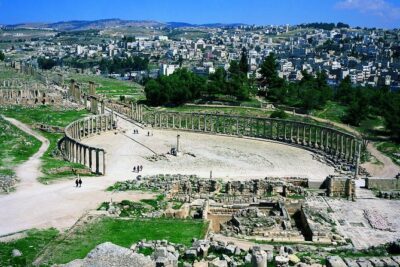
Private Jerash, Ajloun Castle, and Umm Qais Tour
Read our review →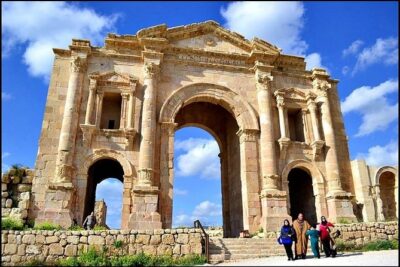
Browse the lists this tour appears in