
Reviewed · JERASH TOURS
Jerash and Dead Sea Full Day Tour from Amman
Roman ruins and salty water in one day.
This Jerash and Dead Sea tour is a simple formula, a well-preserved Roman showpiece plus the world-famous low-point on Earth, all timed for an 8-9 hour day from Amman. You spend half the day at Jerash and then head straight to the Dead Sea for that famous, almost weightless floating feeling.
I especially like the focused Jerash time (around 4 hours), which lets you see major hits like Hadrian’s Arch and the Oval Plaza without feeling rushed. I also like how the day finishes with a real reset at the Dead Sea, including time to float and cover yourself in mud while your body gets a break.
One watch-out: admission tickets are not included, so you’ll want to budget a bit extra on top of the $100 per person price, and plan for a long day that runs close to 9 hours.
In This Review
- Key things to know before you go
- Jerash and Dead Sea in one tight, practical day from Amman
- Jerash ruins: what those big sites are really showing you
- Hadrian’s Arch and the city entry feeling
- Oval Plaza: the open space that makes the ruins readable
- South Theatre and how performances shaped daily life
- Temples of Artemis and Zeus: why two temples matter
- The Jerash Archaeological Museum: a smart add-on if you want context
- Dead Sea time: floating, mud, and what the extreme salinity means
- Floating: the main moment you plan around
- Mud time: the second signature experience
- The view and the mood shift
- Guides and drivers: why the car ride matters more than you expect
- Timing and pacing: getting the most from the 8-9 hour format
- Price and value: is $100 per person worth it?
- Who should book this Jerash and Dead Sea tour
- Should you book? My quick decision guide
- FAQ
- Is pickup included for the Jerash and Dead Sea full-day tour?
- How long is the tour from Amman?
- What are the main stops during the day?
- Are admission tickets included in the tour price?
- Is this a private tour?
- Do I get a mobile ticket?
- What is the cancellation policy?
Key things to know before you go
- 4 hours at Jerash ruins gives you time for the big set pieces, including Hadrian’s Arch and the South Theatre
- Dead Sea float and mud time is the stress-off switch, plus the lake’s extreme salinity shapes the whole experience
- Pickup from Amman and private-group format keeps the day feeling easy and personal
- Drivers often add historical stories (names like Khaled, Yousef, Omar, and Saad came up often) and can help with comfort
- Mobile ticket and responsive team support help you avoid last-minute confusion
- Tickets not included means you should expect an extra spend on entry fees
Jerash and Dead Sea in one tight, practical day from Amman
This is the kind of day plan that makes sense when you are short on time but still want a big Jordan highlight. You start with Jerash, a Roman city that was later buried in sand and then rediscovered, which means you get to walk among stone ruins that still feel shockingly intact. Then you switch worlds and head to the Dead Sea, a salt lake in the Jordan Rift Valley known for extreme salinity and a float that feels unreal.
The best part is that the schedule is built around two distinct experiences. Jerash is about walking, looking, and understanding how a Roman city worked. The Dead Sea is about slowing down, floating, and doing the mud ritual without turning it into a second museum visit. The result is a day that moves, but not at a sprint.
More Jerash ruins tours:
- Full-Day Tour: Umm Qais, Jerash, and Ajloun from Amman
★ 5.0 · 162 reviews - Private Tour of Ajlun and Jerash
★ 5.0 · 130 reviews - Jerash, Ajloun, Umm Qais Day Trip
★ 5.0 · 99 reviews
Jerash ruins: what those big sites are really showing you
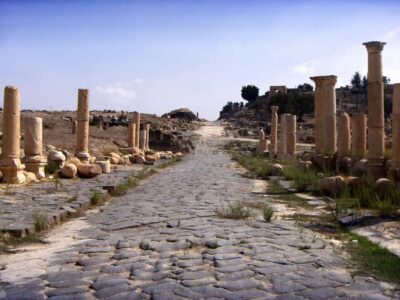
Jerash sits about an hour north of Amman, and the drive gives you a simple transition from city life into ancient life. Once you arrive, the ruins are spread in a way that rewards steady walking. You are not just snapping photos. You are tracing how the city’s public spaces connect, like the main approach areas leading you toward temples and theaters.
Here are the main stops you’ll want to keep on your radar at Jerash:
Hadrian’s Arch and the city entry feeling
Hadrian’s Arch is one of those landmarks that helps you orient instantly. It marks a ceremonial sense of arrival, the kind of structure Romans built to communicate power and order. Standing near it, you can start to imagine processions, civic moments, and the movement of crowds through the city.
If you have ever wondered what Roman cities felt like before modern signage, this is where that question starts to answer itself. You can almost map the city by sight.
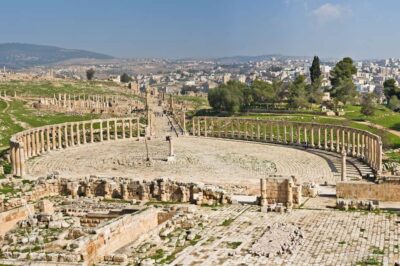
Oval Plaza: the open space that makes the ruins readable
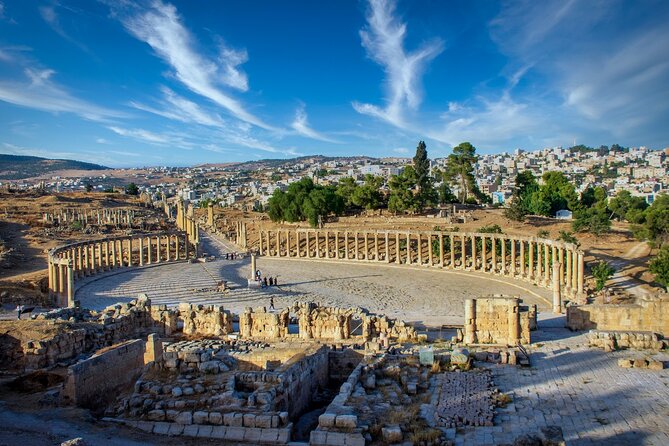
The Oval Plaza works as a visual hub. It is open enough that you can see the surrounding architecture and understand the scale of the place. Rather than feeling like you are stuck inside a maze of stones, you get breathing room, and the ruins start to line up into a logical walking route.
This is where a 4-hour Jerash window really matters. You can look up, catch wide views, then continue forward without always checking your watch.
More day tours leaving Amman:
- 2-Day Tour: Petra, Wadi Rum, and Dead Sea from Amman
★ 5.0 · 1,141 reviews - From Amman: Petra & Wadi Rum Private or group Day Tour
★ 4.9 · 750 reviews - From Amman: Petra and Wadi rum Full day Tour
★ 5.0 · 538 reviews - 2-Day Petra, Wadi Rum and Dead Sea Tour from Amman
★ 5.0 · 467 reviews
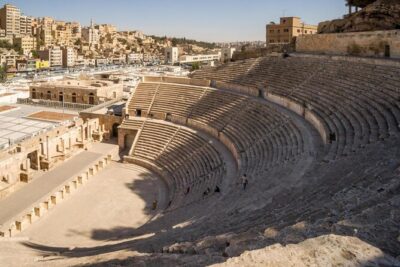
South Theatre and how performances shaped daily life
The South Theatre is one of the most striking reminders that these ruins were not just decorative. Roman cities used theaters as a center for entertainment and public life. Even without a performance happening, the shape of the seating area helps you visualize how people gathered and how acoustics might have worked.
The practical benefit for you: it’s a natural photo stop and a natural pause stop. You can sit, take in the stonework, and then keep moving.
Temples of Artemis and Zeus: why two temples matter
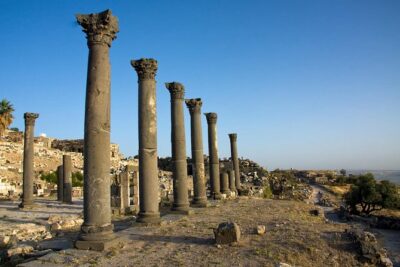
Jerash includes both the Temple of Artemis and the Temple of Zeus. Seeing both in the same city helps you understand the Roman habit of blending local traditions with imported Roman-style monumental building. These temples are more than big piles of stone. They tell you what mattered to the city, what kinds of worship were present, and how the urban space was organized around spiritual power.
The Jerash Archaeological Museum: a smart add-on if you want context
Jerash Archaeological Museum is where the day gets clearer. Instead of trying to interpret everything in your head from ruins alone, the museum houses artefacts from Jerash’s Roman past. If you want the ruins to feel less like random architecture and more like a story you understand, this museum time is a real payoff.
Not everyone needs museum time, but if you like connecting the physical sites to objects and details, you’ll likely appreciate it. Even when admission fees are separate, this stop can be the difference between seeing stones and grasping a place.
Dead Sea time: floating, mud, and what the extreme salinity means
After Jerash, you head to the Dead Sea for the lake experience. This is where the day pivots. Instead of walking, you are relaxing. Instead of reading stone details, you are watching how your body moves in water that behaves unlike regular seas.
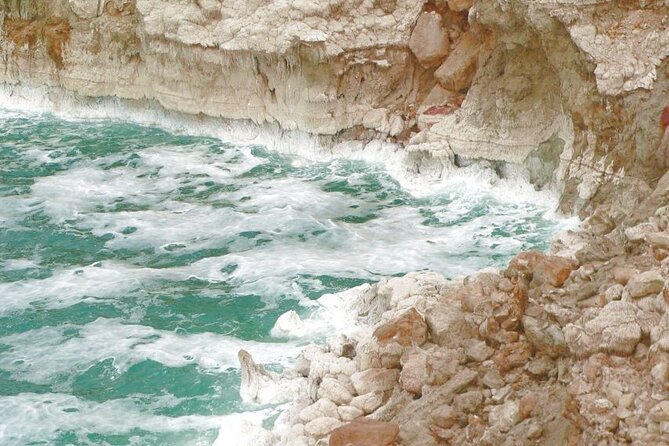
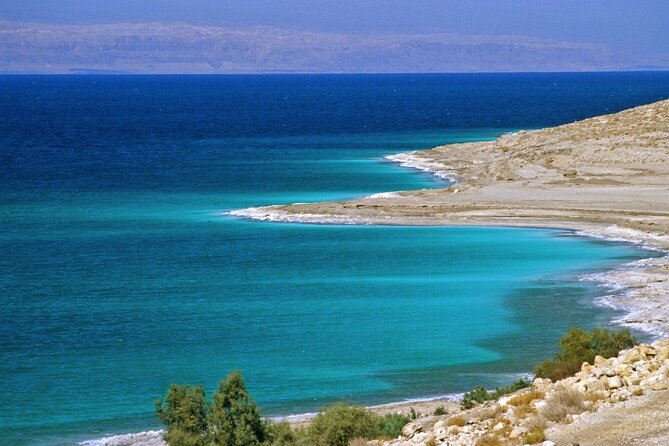
The Dead Sea is a salt lake in the Jordan Rift Valley. It is known for high salinity so extreme that no fish and no plants live there. That fact is not just trivia. It is why the water feels different, why the floating experience is so prominent, and why the whole area has become famous for therapeutic-style mud and mineral rituals.
Floating: the main moment you plan around
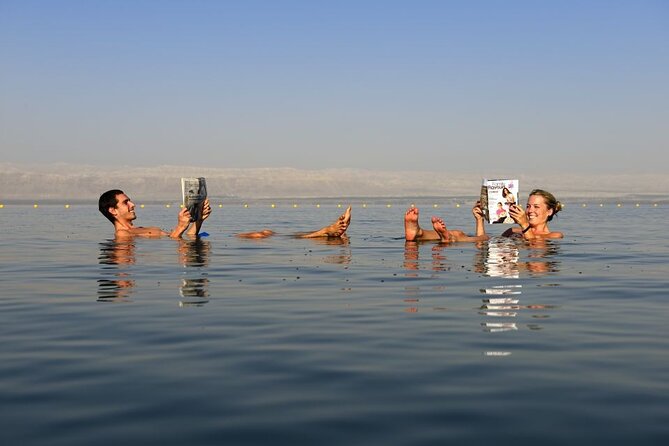
Your schedule includes time to relax on the beach and then float in the water. The float is the headliner, the thing that makes people say this place feels like no place else.
Plan your mindset for this: the goal is not speed. You’ll get more out of the Dead Sea if you take it slow, give yourself time to get comfortable in the water, and then let the strange physics do their magic.
Mud time: the second signature experience
You also have time to cover yourself in mud. Mud is often described as having health benefits, and here it is part of the full experience rather than an optional extra. If you like hands-on experiences, this is the part that makes the Dead Sea feel like a real activity day, not just a scenic stop.
The view and the mood shift
One overlooked benefit is how the Dead Sea changes your energy. Jerash asks for your feet and your attention. The Dead Sea asks for your calm. By the time you leave, your brain often feels quieter.
Guides and drivers: why the car ride matters more than you expect
This tour runs smoothly in large part because the driving is treated as part of the experience. Pickup is offered, and the day feels organized, with a private-group setup so you are not stuck in a multi-stop chaos loop.
In the day’s stories, names like Khaled, Yousef, Omar, Samer, Hani, Hassan, Ahmad, Tariq, Saad, Sami, and Youssef show up as drivers and helpers who are punctual, polite, and willing to make the day easier. Some even shared historical stories in an engaging way, and a few helped with practical comforts like taking good photos or bringing cold water.
That matters because Jerash and the Dead Sea are both popular. When your driver keeps things calm and on time, you spend more of your day inside the moments you actually came for.
Timing and pacing: getting the most from the 8-9 hour format
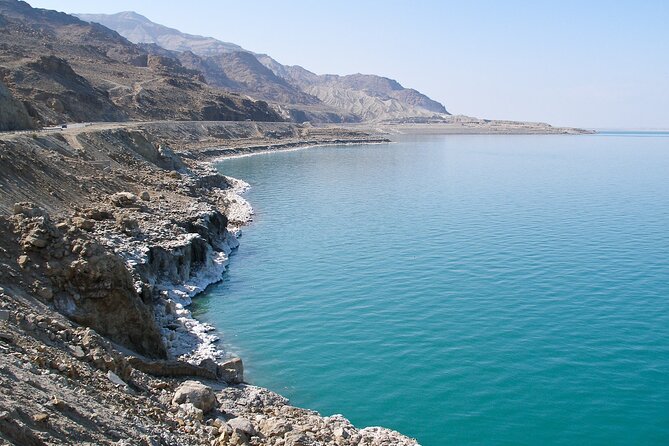
The schedule is simple: Jerash first, then the Dead Sea. You get about 4 hours at Jerash and 4 hours at the Dead Sea. In a tour like this, the exact number of hours matters because both locations benefit from unhurried time.
At Jerash, the ruins reward steady movement, not frantic running between landmarks. With around 4 hours, you can:
- see major sites like the arch, plaza, theater, and temples
- include museum time if you want deeper context
- take a breather when you need it
At the Dead Sea, the clock matters too because the point is comfort. You want enough time to float and do mud without watching the group disappear while you are still getting settled.
A 9-hour day is long. If you are the type who needs frequent breaks, you’ll likely want to pace yourself from the start. The good news is the tour structure naturally alternates walking time with relaxation time.
Price and value: is $100 per person worth it?
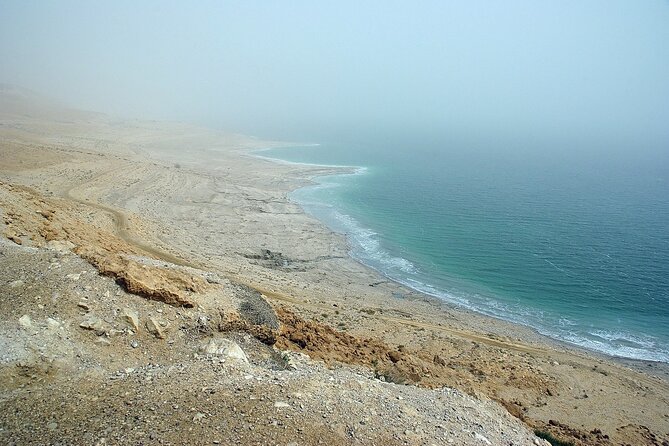
At $100 per person, this tour is positioned as a full-day hit list: Jerash ruins plus the Dead Sea. That combination can be more cost-effective than booking each part separately, especially when pickup is included.
The one important value factor: admission tickets are not included. That means your final spend will be a little higher once you add entry fees at Jerash and the Dead Sea. If you are watching your budget, treat the $100 as the transport and guiding package, then plan extra for site admissions.
What you get that feels like value:
- a full-day plan that covers two of Jordan’s biggest name experiences
- pickup and a private-group format
- time that is long enough to actually experience each place rather than just pass through
For many people, that balance makes it worth it, particularly if Jerash and the Dead Sea are on your must-do list and you do not want to organize the day yourself.
Who should book this Jerash and Dead Sea tour
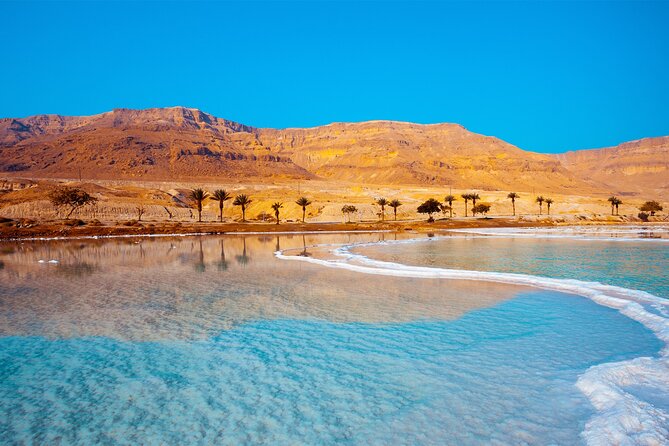
This is a good match if you:
- want Roman history plus a signature natural experience in one day
- prefer an organized schedule with pickup from Amman
- like the idea of a private-group experience rather than a crowded group shuffle
- want drivers who share stories and help make the day feel easy, with support from the team when needed
It may feel like too much if you need very short, low-effort days, since it is an 8-9 hour plan. But if you can handle a long day, the structure makes sense.
If your travel style is practical and you like doing the big things without overcomplicating logistics, this tour fits that well.
Should you book? My quick decision guide
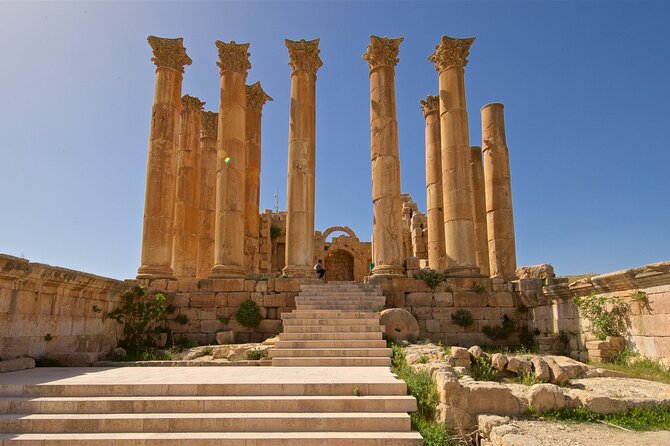
Book it if Jerash and the Dead Sea are both high on your list and you want a smooth, time-efficient day from Amman. The pairing is smart: you get the stone spectacle first, then the relaxing reset. The private-group format and pickup help you avoid unnecessary stress.
Skip it or rethink it if you dislike long days, or if paying extra for admission tickets would strain your budget. In that case, you could consider options that focus on just one site.
FAQ
Is pickup included for the Jerash and Dead Sea full-day tour?
Yes. Pickup is offered as part of the tour.
How long is the tour from Amman?
The duration is about 8 to 9 hours.
What are the main stops during the day?
You’ll visit Jerash Ruins first, then head to the Dead Sea for beach time, floating, and mud.
Are admission tickets included in the tour price?
No. Admission tickets are not included.
Is this a private tour?
Yes. This is a private tour/activity, meaning only your group participates.
Do I get a mobile ticket?
Yes. Mobile ticket is included.
What is the cancellation policy?
You can cancel for a full refund up to 24 hours in advance of the experience start time. If you cancel within 24 hours of the start time, you will not receive a refund.
Newest tours listed in Amman
- Queen Alia Airport Transfers From / To Amman, Petra, Dead Sea.★ 5.0 · 3 reviews
- From Amman :Private full day tour to Jerash ,Ajoune and Um Qais★ 5.0 · 12 reviews
- 2-Day Private Tour in Jordan – Deluxe Tent★ 5.0 · 9 reviews
- FROM AMMAN | Petra & Wadi Rum in one day | The Jordanian Mappers★ 5.0 · 12 reviews
- airport pick up & transportations Services★ 5.0 · 15 reviews
- Dead Sea Half-Day Tour from Amman★ 5.0 · 8 reviews
- From Amman to West ( Madaba, Mt Nebo, baptism site and dead sea)★ 4.0 · 5 reviews
- NEOM Saudi Arabia Transfer from AMM Airport or Aqaba Airport AQJ★ 5.0 · 3 reviews
Jerash Tours, compared.
Full-Day Tour: Umm Qais, Jerash, and Ajloun from Amman
Read our review →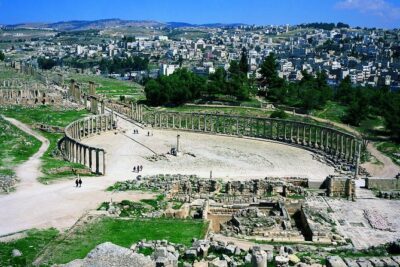
Private Jerash, Ajloun Castle, and Umm Qais Tour
Read our review →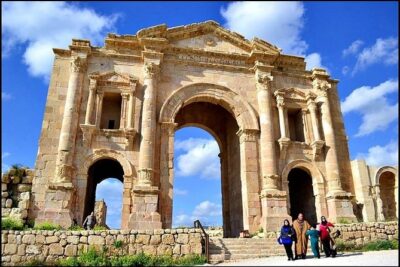
Browse the lists this tour appears in