Reviewed · AMMAN TOURS
Départ Garanti Francophone (GIR) SAMEDI – SAMEDI
Jordan is a country of big surprises.
This 8-day circuit connects Amman to Petra, then trades city streets for desert silence at Wadi Rum and a float at the Dead Sea. I like that it is not just one highlight, you get multiple “wow” stops, plus the everyday rhythm of Jordan along the way.
I especially like the French-speaking (francophone) guide who stays with you through the visit days, and the way the schedule strings together classic sites without turning them into a rush job. You also get practical comfort touches that make a difference, like water during visits and a full set of meals.
The one real consideration is the pace. You are traveling every day, with long drives between regions, and some walking, so you will want moderate physical fitness and good walking shoes.
In This Review
- Key highlights you will feel on the ground
- How this Jordan route earns its ticket price
- Day 1 in Amman: arrive, reset, and get ready
- Amman’s Citadel and Roman Theatre, then desert palaces
- Qasr Al-Harranah and the logic of architecture
- Quseir Amra: early 8th century palace in a wadi setting
- Al-Azraq Al-Shamaly and a 13th-century renovation
- Jerash’s Roman grid and Ajloun’s fortress views
- Ajloun Castle: Crusader-era defense with Jordanian mountain views
- Madaba mosaics, Mount Nebo, and Kerak’s fortress story
- St. George’s Church in Madaba: the mosaic map
- Mount Nebo: the viewpoint behind the story
- Kerak Archaeological Museum: Crusader-era power and collapse
- Petra day: plan your energy and let the canyon do the work
- Little Petra into Wadi Rum: 4×4, bedouin lunch, then real night-sky time
- Dead Sea day: float time with a built-in slowdown
- Hotels, meals, and the “group energy” you can count on
- Price and value: what you really get for $875
- Who this tour fits best (and who should consider another option)
- Should you book this Jordan experience?
- FAQ
- Is pickup offered for this tour?
- Where does the tour start and what time?
- How long is the trip?
- Is there a French-speaking guide?
- Are entrance tickets included?
- What is included for Wadi Rum?
- Are meals included?
- Are drinks included?
- Is there time to swim in the Dead Sea?
- What is the maximum group size?
Key highlights you will feel on the ground
- Francophone guide throughout the visit days so explanations stay clear, not guesswork
- Petra plus Little Petra on the same overall arc, so the desert journey makes sense
- Bedouin 4×4 in Wadi Rum plus lunch, then dinner and night under tents
- Amman history in layers, from the Citadel and Roman Theatre to desert palaces like Quseir Amra
- Meals are mostly handled (7 breakfasts, 6 lunches, 6 dinners), which boosts value
- Group size cap of 150 helps keep the experience from feeling chaotic
How this Jordan route earns its ticket price
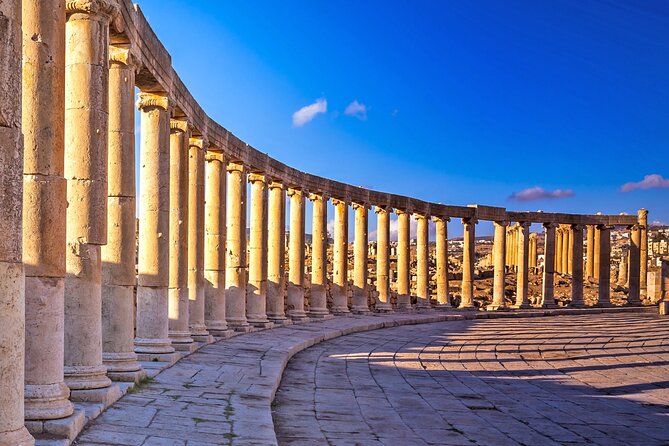
For about eight days, you cover the country’s two biggest “name” destinations, Petra and Wadi Rum, plus a set of strong regional stops that fill in the story of where Jordan sits between empires and trade routes. The value is not just the famous sites. It is that the itinerary includes entrances for the stops listed, organized transport, and a permanent French-speaking guide on the sightseeing days.
Also, this tour is designed for a Saturday-to-Saturday rhythm, so you are not stuck with random partial days. You start with arrival support at Queen Alia International Airport and you end with a transfer back to the airport for departure. That simple start-and-finish structure matters when you are traveling internationally.
The best part is the pacing of themes. Day 2 leans ancient plus “desert architecture.” Day 3 and 4 push into Roman and early medieval fortifications, mosaics, and pilgrimage landscape. Day 5 and 6 are full-on desert and monumental architecture. Day 7 slows down with the Dead Sea swim time.
More things to do in Amman:
- Amman: Petra, Wadi Rum, and Dead Sea 2-Day Tour
★ 4.9 · 1,173 reviews - 2-Day Tour: Petra, Wadi Rum, and Dead Sea from Amman
★ 5.0 · 1,141 reviews - From Amman: Petra & Wadi Rum Private or group Day Tour
★ 4.9 · 750 reviews
Day 1 in Amman: arrive, reset, and get ready
Your first day is straightforward and useful: arrival at Queen Alia International Airport, group welcome and assistance, then a transfer to your hotel in Amman. You get dinner and a night to settle before you start walking days.
This first-night setup is practical because the tour moves fast after. If you land tired, you still have time to reset before the Citadel and Roman Theatre the next day. Bring a simple day plan in your phone, confirm where your hotel is relative to the main roads, and keep your passport and cash easy to access for the next morning.
Amman’s Citadel and Roman Theatre, then desert palaces
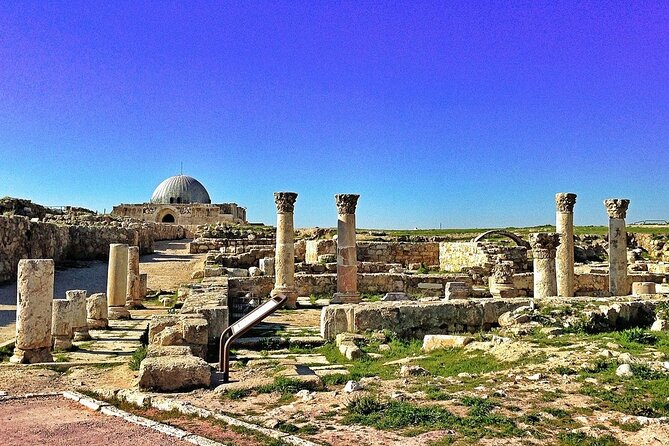
Amman works best when you understand it as layers. This tour starts at the Citadel of Amman (Jabal al-Qalaa), where you look out over the city from a compact hill. The guide helps you connect what you see on the ground to what existed above the modern streets, including the Roman-era ruins, the presence of a palace, and the national archaeological museum.
From there, you head to the Roman Theatre, described as the best-preserved big theatre from Roman Philadelphia, with capacity noted at around 6,000. It is not just about the building. It is about how the space feels, because it gives you a real sense of how audiences moved through forums and procession spaces that are largely vanished now.
Then comes the turn toward desert palaces, and that is one of the smartest “not just Amman” moves in the itinerary.
Qasr Al-Harranah and the logic of architecture
You visit Qasr Al-Harranah, about 55 km from Amman. The point here is not only that it is old. It is that its design suggests a first function tied to military use, though researchers also debate whether it leaned more like a caravansary. That kind of explanation gives you a better way to read desert ruins than just taking photos.
Same trip, a different kind of day:
- From Amman: Petra and Wadi rum Full day Tour
★ 5.0 · 538 reviews - 2-Day Petra, Wadi Rum and Dead Sea Tour from Amman
★ 5.0 · 467 reviews - 3-Day Private Tour from Amman: Petra, Wadi Rum, Dana, Aqaba, and Dead Sea
★ 5.0 · 425 reviews - Petra Full-Day Private Tour from Amman
★ 4.9 · 392 reviews
Quseir Amra: early 8th century palace in a wadi setting
You then go to Quseir Amra, about 26 km southwest of Azraq. You will feel the desert heat in the way the site is described, with light stone blending into the landscape. The visit is anchored in the fact that it was built at the start of the 8th century under Caliph Walid I, who is associated with hunting, poetry, and pleasure. Even if you do not care about the political story, the building’s survival gives you that “how did they pull this off?” moment.
Al-Azraq Al-Shamaly and a 13th-century renovation
The day ends with Al-Azraq Al-Shamaly, where an earlier palace was affected by a 1927 earthquake. You will see how the dating ties to inscriptions above the entrance, including a likely 13th-century renovation and the likely period connected to the mosque in the courtyard. This stop is labeled as free admission in the plan, which is a nice value add since you are still getting a meaningful site.
My practical tip: keep a light layer for early morning and late afternoon. Desert stone cools and warms quickly, and the sights you cover tend to sit in direct sun.
Jerash’s Roman grid and Ajloun’s fortress views
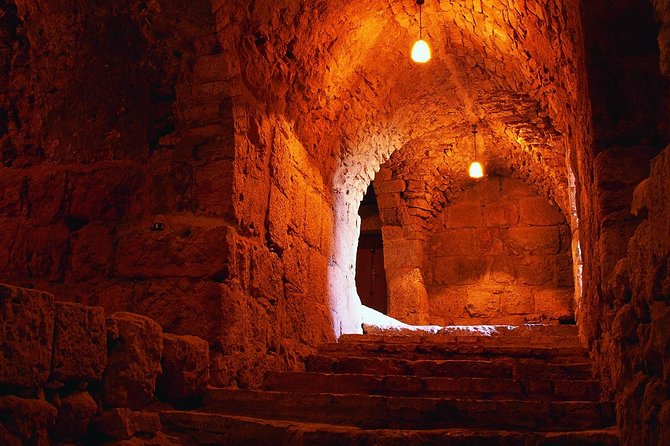
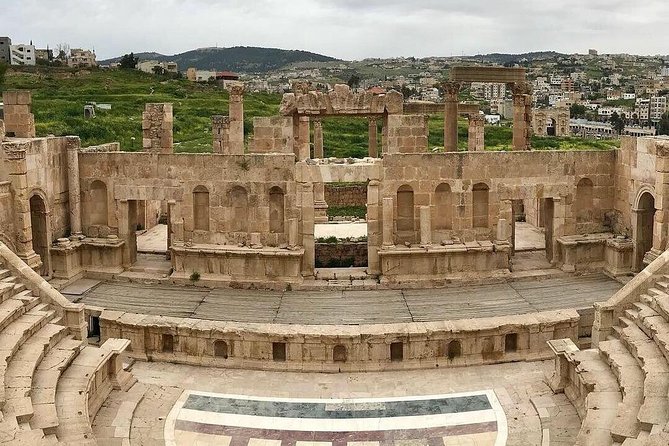
Day 3 is your Roman heavyweight. You go to Jerash (Gérasa), about 45 km from Amman. The tour framing emphasizes that Jerash is one of the best-preserved Roman provincial cities in the region, covered by sand for centuries and restored over decades. You get about 3 hours here, which is enough time to move beyond “I saw columns” and actually understand the city plan: paved streets, colonnades, and a layout that reads like it was built for movement and gatherings.
Ajloun Castle: Crusader-era defense with Jordanian mountain views
After lunch you continue to Ajloun Castle (Qalaat al Rabad), dating to the 12th century around Saladin’s era. The guide focuses on why it was built: defense and control, including local iron mines, and preventing Crusader movement toward Jerusalem. You also get the payoff at the top, with strong views over the Jordan Valley.
What I like about this day is how it shifts from Roman civic life to medieval strategy. You get a change of mindset, which keeps the trip from feeling like one long museum day.
Madaba mosaics, Mount Nebo, and Kerak’s fortress story
Day 4 is built around places of belief and craft.
St. George’s Church in Madaba: the mosaic map
At Madaba, you visit St. George’s Church, famous for a mosaic often called a map of Palestine, uncovered during church construction in 1898. The key detail that makes this worthwhile is that it is not a decorative floor only. It is a 6th-century mosaic, described as largely preserved, built with around two million tesserae, and it showed geography of the Byzantine Near East. Even if you are not a mosaics person, you will recognize how rare this is, because it is a visual document tied to a specific era.
Mount Nebo: the viewpoint behind the story
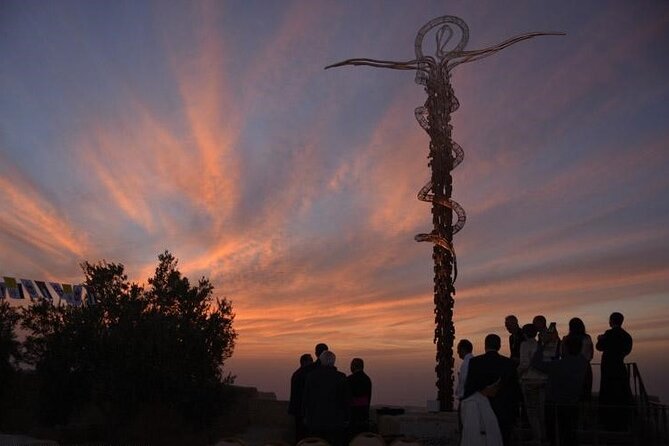
Next is Mount Nebo, about 10 km northwest of Madaba, associated with the biblical story of Moses viewing the promised land. The tour gives you the altitude context, 840 m, and explains why it became a pilgrimage site early in the Christian era. You get time to take in the view because this stop is designed to make the narrative physical.
Kerak Archaeological Museum: Crusader-era power and collapse
You then move toward Kerak and visit the Kerak Archaeological Museum, linked to the fortress history of the region. The story covered includes the early 12th-century seigneurie and the building of the fortress in 1142, its later control by Renaud de Châtillon, and the fall after the wider conflict connected to Hattin in 1187. You will also hear about Saladin’s longer siege, described as more than a year. This is one of those days where you might start the day thinking it is about ruins, and end it realizing it is about trade routes, power struggles, and who controlled the valleys.
Petra day: plan your energy and let the canyon do the work
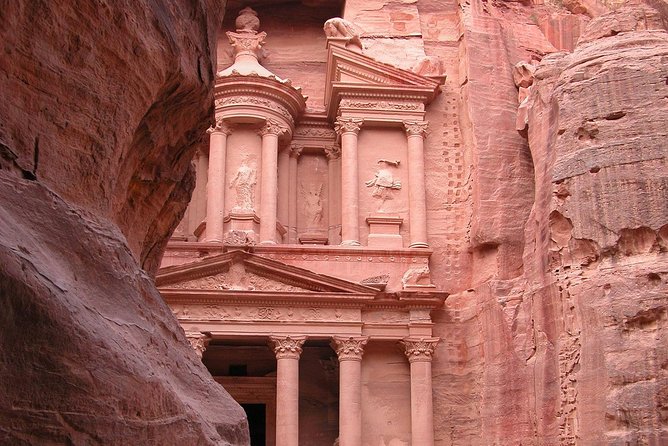
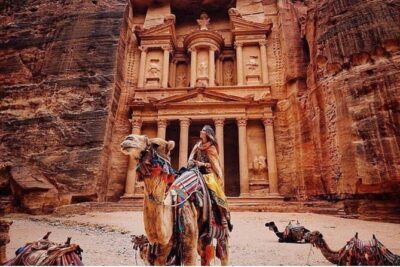
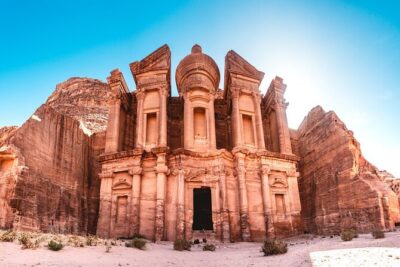
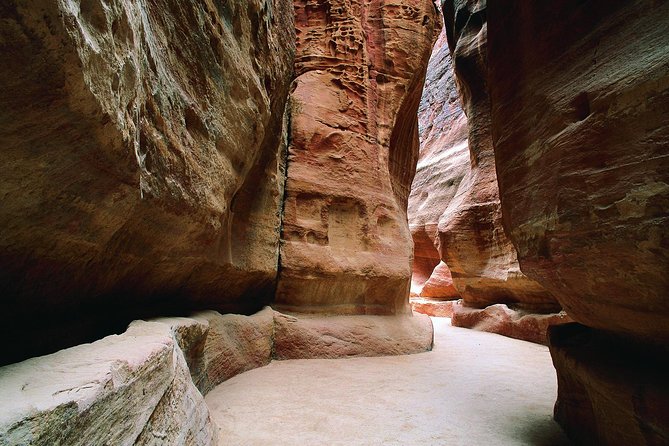
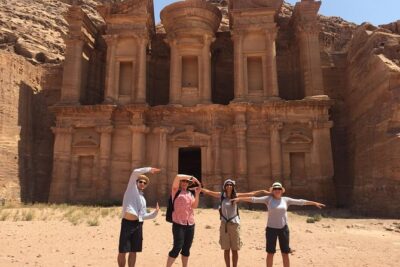
Day 5 is Petra, with about 6 hours in the plan and admission included. Petra is the kind of site where the best value is not how fast you go, it is how you time your breathing. With a guided day like this, you are typically focused on the major highlights first, then you gain freedom within that structure.
The tour includes a full rhythm around the day: breakfast at the hotel, then lunch at a local restaurant with Jordanian flavors. You spend the afternoon walking through the monumental carved landscapes and end with dinner back at your hotel.
Two practical notes if you want Petra to feel great rather than exhausting:
- Wear shoes that you trust for uneven stone. Petra demands it.
- Bring sun protection. Petra days often become “photography plus heat management,” especially if you are moving through open sections.
The plan also mentions a carriage option as not included, so you can decide on that tradeoff yourself. If you want your legs saved for later in the trip, you might consider it, but it is not required to have a good day.
Little Petra into Wadi Rum: 4×4, bedouin lunch, then real night-sky time
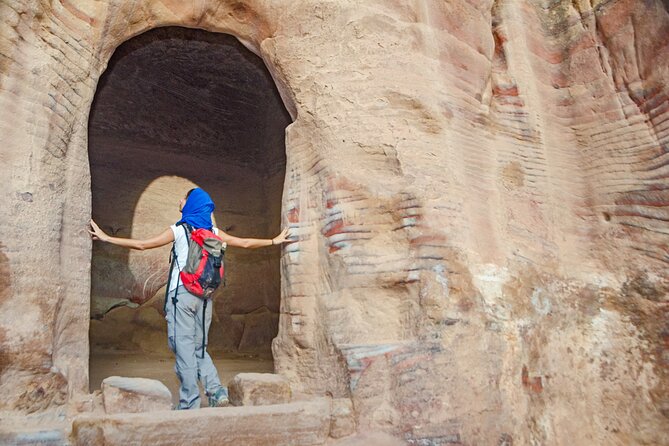
Day 6 starts with Little Petra, then heads to the Wadi Rum Protected Area. This is the day where the trip changes tone from stone architecture to desert scale.
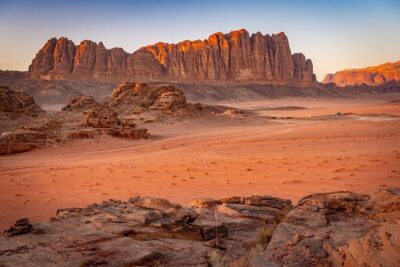
The tour frames the Wadi Rum experience with the idea that Petra is human plus nature, while Wadi Rum is more about nature’s forms, silence, and enormous rock shapes. You get a local 4×4 pick-up tour in the desert for about 1 hour 30, then lunch in a bedouin camp.
Then comes the part that most people remember: dinner and one night under bedouin tents. That is not just a novelty add-on. It is where you get the closest thing on this trip to an unplugged moment, because the itinerary moves you away from towns and into a controlled camp setting.
A useful mindset: the desert day is scenic, but it also involves time in a vehicle and then time walking around camp areas. Keep your phone batteries managed. Save videos for night, photos for the bright hours.
Dead Sea day: float time with a built-in slowdown
Day 7 is a calmer capstone. You take breakfast at the camp, travel via the Araba road toward the Dead Sea region, and you get lunch. You also get free time to bathe, which is the point of this stop.
The tour highlights the Dead Sea setting as a dramatic basin, described as the lowest point on earth at around 1306 feet below sea level, and notes that the area has been linked with health benefits for at least two thousand years. The plan focuses on how sun, water, mud, and air create conditions that may help with chronic problems like dermatological and respiratory issues.
Even if you go in for the myth, you can still treat this day like a reset. In practical terms, bring a towel you do not mind rinsing, and avoid getting the water in your eyes. Then let the afternoon be about comfort, not sightseeing.
Hotels, meals, and the “group energy” you can count on
A big reason this tour feels good day to day is the meal structure. You have 7 breakfasts, 6 lunches, and 6 dinners included. That means you are not constantly negotiating where to eat after a long day on the road. The tour also includes water during visits, which again saves time and money.
In terms of service, you are not just dropped and directed. You have a permanent French-speaking guide for the sightseeing days and local drivers for the transport. The experience provider is Enjoy Jordan – Day Tours, and the program notes a cap of 150 travelers. That is on the high side for intimacy, but a cap like that still gives you a clearer expectation than an unlimited crowd.
On the personal side, I like that the guide experience has names people remember. I have seen guides like Abdelrhman Bawaneh described as passionate and involved, and Firas highlighted as friendly. When you have a guide you can trust, it makes the difference between “I saw ruins” and “I get what I’m seeing.”
Price and value: what you really get for $875
At $875 per person for about 8 days, the headline question is: does it feel like a bargain or a splurge?
For this tour, value comes from the included items that normally add up quickly in Jordan:
- Transport in modern air-conditioned vehicles
- Entrance fees for the sites listed in the itinerary
- A Bedouin 4×4 excursion in Wadi Rum
- Most meals handled (7 breakfasts, 6 lunches, 6 dinners)
- A French-speaking guide across the visit days
- Arrival and departure assistance before customs
What is not included is also clearly spelled out: drinks, the Petra carriage promenade, flights, usual tipping for guide, drivers, restaurants, and hotels, travel insurance, and the New Year evening.
So if you already planned to book your own entrance tickets, a Wadi Rum 4×4, and hire a French guide, this tour likely looks much more reasonable. If you prefer total independence and you speak Arabic or English comfortably, you might compare costs with DIY bookings. But if you want clarity and time saved, the package makes sense.
Also note: if you need a single supplement, extra charges apply if you require an extra room.
Who this tour fits best (and who should consider another option)
This tour fits best if you:
- Want French-speaking guidance for major sites like Petra, Jerash, Madaba, and Wadi Rum
- Like a structured route that still covers enough variety to feel like a full Jordan trip
- Prefer having meals planned rather than hunting daily
You might want to look elsewhere if you:
- Want fully flexible pacing with no set driving schedule
- Have very limited walking tolerance. Petra and the ancient sites require time on your feet, even if the stops are guided
For most people with moderate physical fitness, the mix of driving days and sightseeing blocks is manageable.
Should you book this Jordan experience?
I would book it if you want a clean, well-explained Jordan itinerary that hits the big monuments without turning into a logistics headache. The combination of Petra, Wadi Rum overnight, and the French guide is the big selling point, and the included meals help the budget feel calmer than many “highlight-only” tours.
I would think twice if you hate busy days or you know you cannot handle long travel between regions. This is not a slow travel itinerary, it is a best-of route with strong structure.
If you are excited by a week of ancient sites plus a real desert night, this one delivers.
FAQ
Is pickup offered for this tour?
Yes. Pickup is offered, and the tour also includes welcome and assistance for the group on arrival and departure before customs.
Where does the tour start and what time?
The start is at Queen Alia International Airport in Amman, Jordan, with a start time of 8:00 am.
How long is the trip?
It runs for 8 days approximately, with a Saturday-to-Saturday departure pattern.
Is there a French-speaking guide?
Yes. You have a French-speaking guide (guide francophone permanent) during the days of the visits.
Are entrance tickets included?
Entrance fees mentioned in the itinerary are included, including tickets for key sites like the Citadel of Amman, the Roman Theatre, Jerash, and Petra.
What is included for Wadi Rum?
You get a 4×4 Bedouin jeep tour in the desert for about 1 hour 30, plus lunch in a Bedouin camp, and then dinner and an overnight stay under Bedouin tents.
Are meals included?
Yes. Breakfast is included for 7 days, lunch for 6 days, and dinner for 6 days.
Are drinks included?
No. Drinks that are not mentioned in the program are not included. The tour includes a bottle of water offered in the bus during visits.
Is there time to swim in the Dead Sea?
Yes. After reaching the Dead Sea region and lunch, you have free time to swim.
What is the maximum group size?
The maximum group size is 150 travelers.
Newest tours listed in Amman
- Queen Alia Airport Transfers From / To Amman, Petra, Dead Sea.★ 5.0 · 3 reviews
- From Amman :Private full day tour to Jerash ,Ajoune and Um Qais★ 5.0 · 12 reviews
- 2-Day Private Tour in Jordan – Deluxe Tent★ 5.0 · 9 reviews
- FROM AMMAN | Petra & Wadi Rum in one day | The Jordanian Mappers★ 5.0 · 12 reviews
- airport pick up & transportations Services★ 5.0 · 15 reviews
- Dead Sea Half-Day Tour from Amman★ 5.0 · 8 reviews
- From Amman to West ( Madaba, Mt Nebo, baptism site and dead sea)★ 4.0 · 5 reviews
- NEOM Saudi Arabia Transfer from AMM Airport or Aqaba Airport AQJ★ 5.0 · 3 reviews
Amman Tours, compared.
2-Day Tour: Petra, Wadi Rum, and Dead Sea from Amman
Read our review →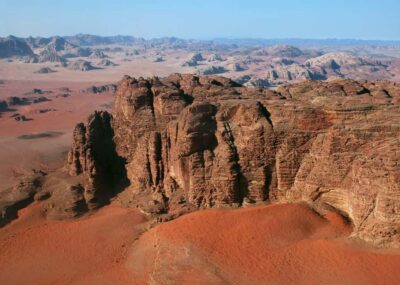
2-Day Petra, Wadi Rum and Dead Sea Tour from Amman
Read our review →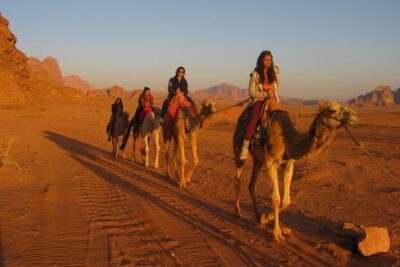
3-Day Private Tour from Amman: Petra, Wadi Rum, Dana, Aqaba, and Dead Sea
Read our review →