Reviewed · AMMAN TOURS
Départ Garanti Francophone (GIR) DIMANCHE – SAMEDI
Petra, Wadi Rum, and the Dead Sea, all together. I like how this week balances big wow moments with calmer stops, plus you get a French-speaking guide to translate the context of what you see. I also love that most costs are handled in advance, including entrance tickets and a big chunk of meals, so you can spend your time looking at Jordan instead of calculating what costs extra.
The one real caution is the pace. You will walk plenty on uneven stone in older sites, Petra takes time and energy, and Wadi Rum means an outdoor desert night in tents, so pack for comfort, not just photos.
What makes it feel smoother is the human factor. Recent feedback repeatedly praises drivers and guides by name, like Audi, Jacob, Haithem, and Ahed, for being organized, friendly, and easy to trust on long driving days.
In This Review
- Key highlights at a glance
- A smart 7-day route, built for first-timers
- Day 1 in Amman: landing smooth, sleeping ready
- Jerash Ruins and Ajlun Castle: Roman planning plus fortress views
- Madaba and Mount Nebo: mosaics that act like maps
- Karak Castle: a fortress stop with the right kind of atmosphere
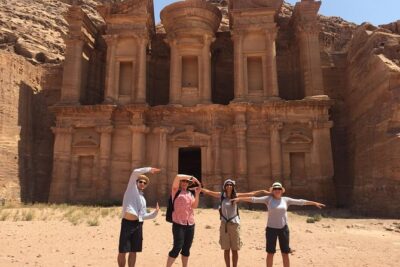
- Petra day: when one week turns into one big moment
- Little Petra (Al-Beidha) and Wadi Rum: desert scale, not just desert photos
- Dead Sea day: swim time plus the mud-and-minerals myth you can try
- Price and value at about $1,335 per person
- Who should book this Jordan week, and what to pack
- Should you book it? My practical take
- FAQ
- What language is the guide?
- How long is this tour?
- What major sites are visited?
- Is the Wadi Rum 4×4 included?
- Is Petra’s horse carriage included?
- Can I cancel for a full refund?
Key highlights at a glance
- French guide plus entrances and most meals reduce friction during the trip
- Jerash and Ajlun add Roman and Crusader-era sights before Petra steals the show
- Madaba and Mount Nebo mosaics connect Jordan’s Bible geography to art you can still see
- A full day in Petra gives you room to wander at your own speed
- Wadi Rum 4×4 plus camp night turns the desert into an experience, not a drive-by stop
- Dead Sea time for swimming and mud gives you the classic low-point moment
A smart 7-day route, built for first-timers
This is the kind of Jordan itinerary that makes sense if you have limited time but still want the south-west highlights. You start in Amman, then build toward the classics: Jerash and Ajlun for history, Madaba and Mount Nebo for mosaics and biblical geography, Karak for fortress views, then Petra, followed by Wadi Rum and the Dead Sea.
What I like is the pacing logic. You do the “understand what you are looking at” stops before you hit the heaviest hitters. By the time you arrive at Petra, you have already seen Roman urban planning, Byzantine mosaics, and major fortifications. That makes Petra feel less like a single spectacle and more like part of a bigger story of empires, trade routes, and stone-cut ambition.
There is also a practical advantage: the logistics are handled as a loop, so you do not spend your days hunting for rides, tickets, and meeting points. Transport is done in modern, air-conditioned vehicles, and you get airport assistance through the key handoff moments.
More things to do in Amman:
- Amman: Petra, Wadi Rum, and Dead Sea 2-Day Tour
★ 4.9 · 1,173 reviews - 2-Day Tour: Petra, Wadi Rum, and Dead Sea from Amman
★ 5.0 · 1,141 reviews - From Amman: Petra & Wadi Rum Private or group Day Tour
★ 4.9 · 750 reviews
Day 1 in Amman: landing smooth, sleeping ready
Day 1 is straightforward. You arrive at Queen Alia International Airport, get picked up, and transfer to your hotel in Amman. Then there is dinner and an overnight, which is exactly what you want after a flight.
Amman is a good place to “wake up” before the long drives south. Even if you do not have time for a big city plan on Day 1, being placed in Amman first helps you reset and get ready for the next day’s early site time.
Practical tip: keep an eye on shoes and socks. You will spend multiple days walking outdoors and on older surfaces. Even a short first day in Amman is a good moment to test what you brought.
Jerash Ruins and Ajlun Castle: Roman planning plus fortress views
Day 2 is a strong pairing. First comes Jerash Ruins (also called Gérasa), about 45 km from Amman. Jerash is one of the best preserved Roman provincial cities in the region, and you feel it immediately. The scale is impressive, and the layout reads like a textbook of how Roman towns worked, with wide streets, colonnades, and a sense of formal city design.
You also get a sense of why the site survived so long. Jerash was buried under sand for centuries before it was discovered and restored in the modern era. The limestone used for much of the city is that warm, pinkish orange tone, and the light there can be beautiful at different times of day. It is the kind of place where even if you are not a history super-nerd, your brain still registers order and grandeur.
After lunch, you continue to Ajlun Castle (Qala’at ar-Rabad). This is a different vibe. Jerash shows power through civic planning. Ajlun shows power through defense, built in the 12th century during Saladin’s era to protect the region and control access tied to local iron mines, plus to deter Crusader movement toward Jerusalem.
From the top, the views over the valley can make the whole fortress feel more real. It is easier to understand why someone would build there once you see the sight lines.
Possible drawback: Day 2 is not just sightseeing, it is movement. Even if the driving is comfortable, you will still be walking. If your schedule tends to feel too packed, this is the day to pace yourself, take breaks, and hydrate.
Madaba and Mount Nebo: mosaics that act like maps
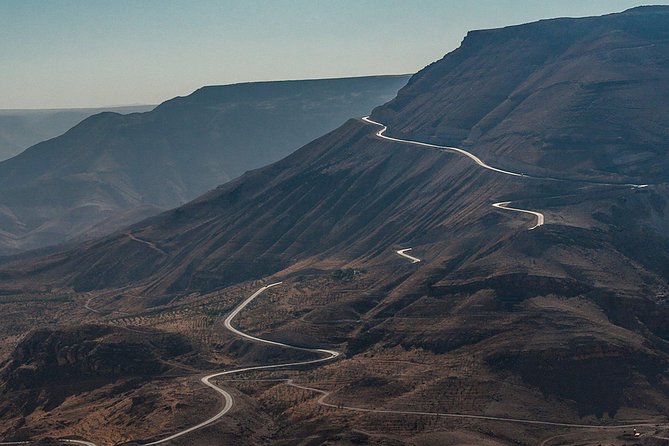
Day 3 is where Jordan shows off its art. You head via the King’s Highway toward Madaba, famous for mosaics in churches and homes. The big stop is St. George’s Church, where you can see the famous Mosaic of Palestine. It was uncovered in 1898 during construction and is known for its detailed geography from the Byzantine period. The mosaic dates to the mid-6th century, and it covers a huge original area, made from millions of small tesserae.
If you care about details, this is the day you will enjoy most. You can literally stand in front of a floor map of the region as it was understood centuries ago. It is also a reminder that the Middle East has long been a crossroads for people, trade, and belief.
Then comes Mount Nebo, about 10 km north-west of Madaba. You visit the area associated with Moses and Deuteronomy 34. The site is traditionally connected to the view of the promised land and is also linked to the possible tomb of Moses. Regardless of your personal beliefs, the physical viewpoint matters. You are at 840 m altitude, so the setting helps explain why this spot became significant.
The mosaic aspect continues here too, so you are not switching from art to only scenery. It is art plus geography, and that combination makes the day feel coherent.
Same trip, a different kind of day:
- From Amman: Petra and Wadi rum Full day Tour
★ 5.0 · 538 reviews - 2-Day Petra, Wadi Rum and Dead Sea Tour from Amman
★ 5.0 · 467 reviews - 3-Day Private Tour from Amman: Petra, Wadi Rum, Dana, Aqaba, and Dead Sea
★ 5.0 · 425 reviews - Petra Full-Day Private Tour from Amman
★ 4.9 · 392 reviews
Karak Castle: a fortress stop with the right kind of atmosphere
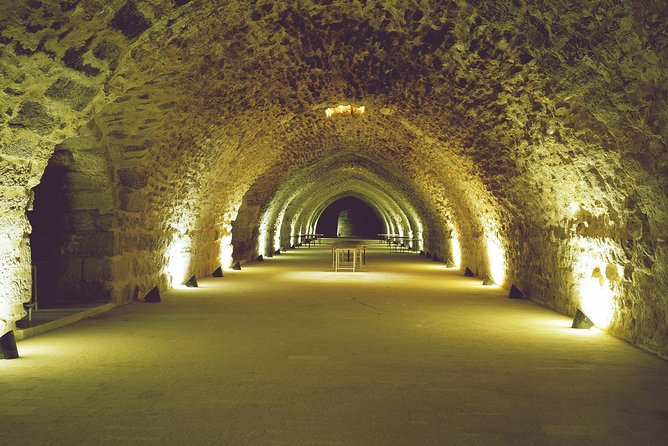
After Madaba and Mount Nebo, the route continues to Karak Castle. Karak is set in a wadi valley, and it gives you a sense of how movement through the region happened. Strongholds like this were designed to control routes through the landscape.
The castle’s story in this region touches the period of the Crusader states, including the seigneurie of Montréal and the role played by key figures tied to the Kingdom of Jerusalem era. It is the kind of site where the buildings help you understand the politics, because you can see the strategic thinking in where things were placed.
Practical note: Karak can feel windy and cooler than lower areas, depending on season. Bring a layer if you run cold easily. Even when the trip is warm, fortress sites can change the feel fast.
Petra day: when one week turns into one big moment
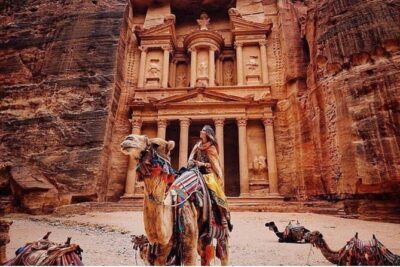
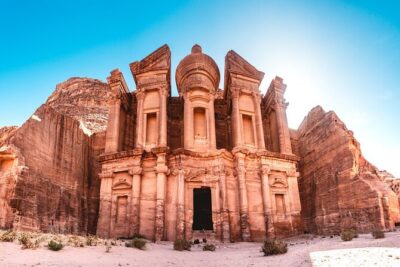
Day 4 is devoted to Petra, and that is the right decision. You get a full day built around a comfortable rhythm: breakfast, then Petra exploration with time to do it properly, lunch at a local restaurant, and dinner back at your hotel.
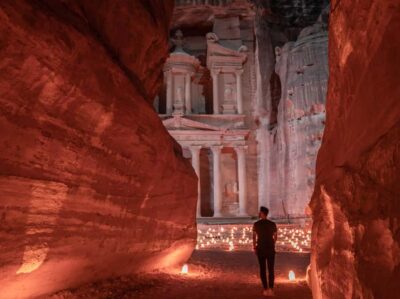
Petra is not just a checklist stop. It’s a place where the pace of walking changes the experience. Start early if possible, but also allow moments to slow down. Petra rewards patience because the carving, the colors of the rock, and the changing views inside the canyon make it feel different every hour.
One practical thing: your Petra ticket time includes guided time for context, but you will also want personal wandering time. If you rush, you end up seeing the same angle of Treasury style architecture without letting the wider site sink in.
And yes, there is an extra cost option at Petra: a horse-drawn carriage promenade is not included. If you feel unsure about walking distances, it is something you might consider, but it is also worth asking your guide what makes sense for your comfort level.
Little Petra (Al-Beidha) and Wadi Rum: desert scale, not just desert photos
Day 5 starts with Al-Beidha, sometimes called Little Petra. It is a great warm-up. Petra is huge, and Little Petra offers a more intimate feel before you go full desert.
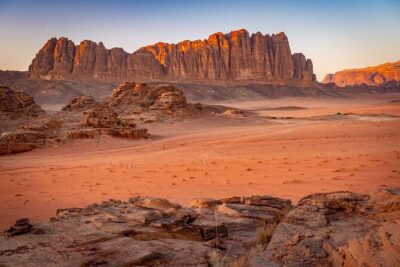
Then you head to Wadi Rum Protected Area, the desert famous for rugged cliffs, valleys, and that wide-open silence effect people talk about. In the program’s description, you also get the literary and film connection to T. E. Lawrence and the Great Arab Revolt. That context matters, because Wadi Rum is not just pretty scenery, it is tied to how the desert became part of modern storytelling.
The highlight here is the local 4×4 jeep tour inside the desert for about 1.5 hours. Jeep time is short enough to feel adventurous, long enough to see the terrain change. Your guide can help you connect what you see to the reasons the place is famous.
You then have lunch in a Bedouin camp, and the day closes with dinner and an overnight in tents. This is one of the most value-heavy parts of the whole trip because it is hard to replicate the experience by yourself unless you know the right providers. Staying there also means you see the desert in a different light, not only at midday.
Possible drawback: tent nights are not the same as a hotel. If you dislike basic setups or you are sensitive to temperature changes, plan accordingly and ask what the overnight setup feels like in practice.
Dead Sea day: swim time plus the mud-and-minerals myth you can try
Day 6 is a classic low-point day. After breakfast, you drive toward the Dead Sea Region via the Wadi Araba route.
At the Dead Sea, the program sets expectations: you will have lunch and time free for swimming. The Dead Sea is described as the lowest point on earth, about 1306 feet below sea level, and it is surrounded by mountains and hills that can look almost unreal.
The included motivation for the visit is also practical. The tour notes that the therapeutic benefits of the Dead Sea have been known for at least 2000 years, and that the natural mix of sun, water, mud, and air is believed to help with various chronic skin conditions. You should treat this as traditional and commonly reported, not medical advice. But the point is you get to try the experience, float, and see what the world-famous “Dead Sea feel” is like.
Tip: bring footwear for entry if you are unsure about slippery areas. Also, rinse well after. Salty water and mud can be tough on skin and on contacts.
Price and value at about $1,335 per person
At $1,335 per person for about 7 days, this tour is priced for people who want structure and fewer surprises. The big value levers are not just the famous sites, it is what is included.
You get:
- A permanent French-speaking guide
- Modern, air-conditioned transport
- Entrance fees for the stops listed in the plan
- A Bedouin 4×4 jeep excursion in Wadi Rum (about 1.5 hours)
- Most meals across the week, including 6 breakfasts, 5 lunches, and 5 dinners
- A bottle of water during visits
- Pickup and assistance around key airport moments
What that means for you is time and mental load saved. You spend less on separate ticketing and coordinating, and you spend more on moving through Jordan with context.
What costs extra is also clear. Beverages are not included, typical tipping is not included, travel insurance is not included, and the Petra horse-drawn carriage promenade is extra if you choose it. Flights are obviously not included.
There is also a practical note on group size. The maximum is listed as 150 travelers, so this is not a private, quiet-only style tour. At big sites, you may feel like part of a larger group.
So, is it worth it? If you want a one-week route that hits Petra plus Wadi Rum plus the Dead Sea, and you prefer a guide who keeps things running in French, it is a strong value. If you already know exactly how you will handle tickets, drivers, and meals on your own, you might be able to do it cheaper. But you would also take on more planning work.
Who should book this Jordan week, and what to pack
This trip makes the most sense if you:
- Want a 7-day sampler of south-west Jordan highlights
- Prefer a French-speaking guide
- Like being shown the meaning behind what you see, especially with mosaics and fortifications
- Prefer comfort in transport and a planned flow between stops
It also fits well if you travel in a way that values safety and smooth handoffs. Recent feedback includes stories of drivers like Jacob being professional and caring for a family setting, with people feeling safe under his care.
What to pack:
- Comfortable walking shoes for Petra and older stone sites
- A light layer for fortress and desert mornings or evenings
- Sun protection. You will be outside for long periods.
- A swimsuit if you want the Dead Sea swim time
- Patience for long-drive days. Jordan distances add up, even when the car ride is comfortable
If you want maximum flexibility at every sight, this type of guided route may feel a little fixed. But it gives you a strong overall balance: Roman, Byzantine, Crusader, Petra, desert, then the Dead Sea.
Should you book it? My practical take
Book it if you want a guided week that covers Petra, Wadi Rum, and the Dead Sea without you building the puzzle yourself. The combination of entrances, meals, and the Wadi Rum 4×4 camp night is where the value is strongest. You also get the benefit of learning context, especially through Madaba’s mosaics and the Mount Nebo connections.
Skip it or adjust expectations if you:
- Hate structured schedules and want to wander without any group rhythm
- Are not comfortable with a moderate fitness level and lots of walking
- Expect every night to be hotel-level comfort, because Wadi Rum is tents
If you like an efficient route with real cultural stops before the big icons of Jordan, this is a solid choice.
FAQ
What language is the guide?
The tour includes a French-speaking permanent guide during the visit days.
How long is this tour?
It runs for about 7 days.
What major sites are visited?
You will visit Amman, Jerash, Ajlun Castle, Madaba, Mount Nebo, Karak Castle, Petra, Al-Beidha (Little Petra), Wadi Rum, and the Dead Sea.
Is the Wadi Rum 4×4 included?
Yes. The tour includes an excursion in a Bedouin 4×4 jeep for about 1.5 hours in Wadi Rum.
Is Petra’s horse carriage included?
No. The carriage promenade at Petra is not included.
Can I cancel for a full refund?
Yes, you can cancel up to 24 hours in advance for a full refund. If you cancel less than 24 hours before the start time, the amount paid is not refunded.
Newest tours listed in Amman
- Queen Alia Airport Transfers From / To Amman, Petra, Dead Sea.★ 5.0 · 3 reviews
- From Amman :Private full day tour to Jerash ,Ajoune and Um Qais★ 5.0 · 12 reviews
- 2-Day Private Tour in Jordan – Deluxe Tent★ 5.0 · 9 reviews
- FROM AMMAN | Petra & Wadi Rum in one day | The Jordanian Mappers★ 5.0 · 12 reviews
- airport pick up & transportations Services★ 5.0 · 15 reviews
- Dead Sea Half-Day Tour from Amman★ 5.0 · 8 reviews
- From Amman to West ( Madaba, Mt Nebo, baptism site and dead sea)★ 4.0 · 5 reviews
- NEOM Saudi Arabia Transfer from AMM Airport or Aqaba Airport AQJ★ 5.0 · 3 reviews
Amman Tours, compared.
2-Day Tour: Petra, Wadi Rum, and Dead Sea from Amman
Read our review →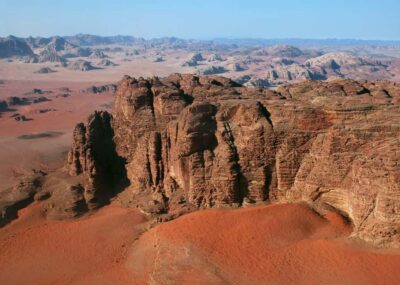
2-Day Petra, Wadi Rum and Dead Sea Tour from Amman
Read our review →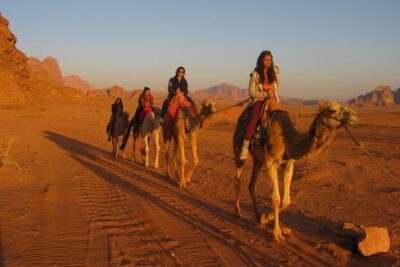
3-Day Private Tour from Amman: Petra, Wadi Rum, Dana, Aqaba, and Dead Sea
Read our review →