
Reviewed · 7-DAY EXPERIENCES
7 Day 6 Night Discover Jordan Tour
Petra, dunes, and Roman ruins in one week. This 7-day, 6-night tour strings together major Jordan highlights with comfortable hotel bases, timed experiences, and English help in the places that benefit most from a guide.
I love how the trip balances guided storytelling with free time, especially in Petra and Jerash. I also like the pacing around the big natural moments, like Dead Sea sunrise and an overnight in Wadi Rum with a BBQ dinner.
The only real consideration is that the schedule is packed, so you will have long driving days, plus lots of walking once you are at sights. It lists moderate physical fitness, and Petra includes steep climbs if you choose to do them.
In This Review
- Key highlights worth planning around
- A well-used route, not just a checklist
- Arriving in Amman: smooth pickup and a first-night buffer
- Jerash, Ajloun, and Umm Qais: Roman power with pine-forest calm
- On the Kings Highway to Petra: mosaics, viewpoints, and medieval walls
- Entering Petra: a guided Siq, then your own time in the city
- Little Petra to Wadi Rum: from Nabatean dining rooms to sand dune drama
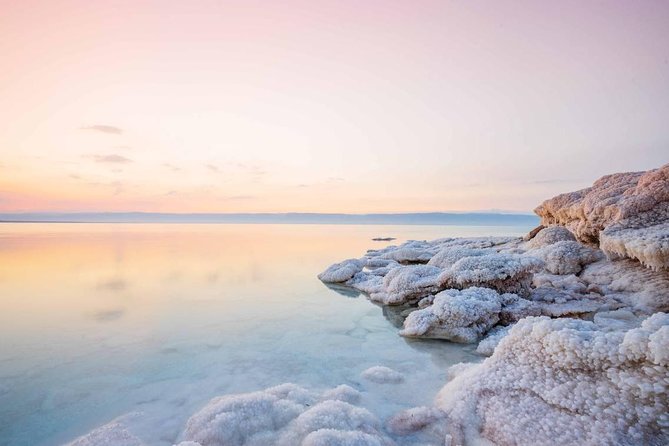
- Bethany beyond the Jordan and the Dead Sea: floating after sunrise
- Hotels and included meals: comfort without wasting the day
- Transport and guide quality: where the tour really wins
- Price and value: what $1,230.77 buys you in Jordan
- Who should book this tour, and who should tweak it
- Should you book this 7-day Discover Jordan tour?
- FAQ
- Is this tour private or shared?
- What cities and regions does the itinerary cover?
- Are there English-speaking guides during the key sightseeing days?
- What is included for Wadi Rum?
- Is Petra guided or self-guided?
- What about meals during the trip?
- Are entrance fees included?
- How physically demanding is the trip?
- What if weather is bad?
Key highlights worth planning around
- Private, just your group: only your group participates, so days feel less like a cattle call
- English guides in Jerash and Petra: you get context where it matters most
- Kings Highway classics: Madaba mosaics, Karak Castle, and Dana viewpoint breaks up the drive
- Wadi Rum 4×4 with Bedouin guidance: built for sand dunes, rock bridges, and starry evenings
- Dead Sea experience timed well: breakfast and sunrise, then the Bethany beyond the Jordan stop before floating
- Multiple hotel bases: 2 nights in Amman and 2 nights in Petra helps you absorb the places instead of rushing through
A well-used route, not just a checklist
This tour is built like a string of “must-sees” that actually connect logically. You start with Amman, then work north through Jerash, Ajloun, and Umm Qais, and later swing south via the Kings Highway. After that, the big three land in the middle and end of the trip: Petra, Wadi Rum, and the Dead Sea.
What makes the route practical is the mix of guided time and self-paced time. You get a guided walk in Jerash (so you know what you are looking at), and a guided Petra tour (so you understand the Nabatean city layout). Then you get to wander independently in places like Ajloun Castle and Umm Qais, where the ruins and viewpoints are straightforward to explore.
Also, because you sleep in Amman and Petra for more than one night, you are not stuck moving every single day. That matters in Jordan, where a “quick stop” can turn into a long drive once you account for roads and time.
More things to do in Amman:
- Amman: Petra, Wadi Rum, and Dead Sea 2-Day Tour
★ 4.9 · 1,173 reviews - 2-Day Tour: Petra, Wadi Rum, and Dead Sea from Amman
★ 5.0 · 1,141 reviews - From Amman: Petra & Wadi Rum Private or group Day Tour
★ 4.9 · 750 reviews
Arriving in Amman: smooth pickup and a first-night buffer
On Day 1 you arrive at Amman Airport and meet an on-the-ground representative who helps with the visa process. The tour notes a free visa eligibility when you are staying 2 or more consecutive nights, so this is a good moment to have your passport details ready in advance.
From there, it is a quick transfer into Amman, and you sleep in a hotel that includes breakfast. If your flight lands early enough, you might have the option of an Amman City Tour, which is a nice way to knock out basic city orientation without committing a full day.
Why I like this setup for you: jet lag is real, and Amman is a city where it helps to have at least one low-stress evening. You start the trip with time to settle, then you go into the bigger day trips on fresh legs.
A small drawback: if your arrival is late, you will likely have a quieter first evening and rely on the next day for the city side.
Jerash, Ajloun, and Umm Qais: Roman power with pine-forest calm
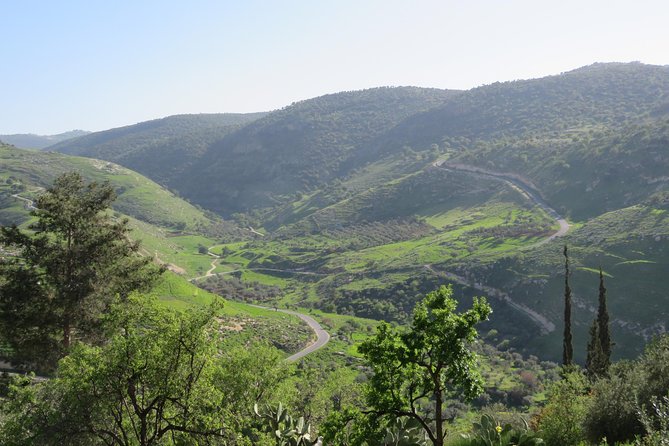
Day 2 is one of those days that feels like you are getting “more Jordan” than the calendar suggests. You drive north to Jerash, one of the best-preserved Roman cities in the region. The tour includes a 1.5-hour guided visit, and that guide time is the difference between seeing ruins and understanding what you are seeing.
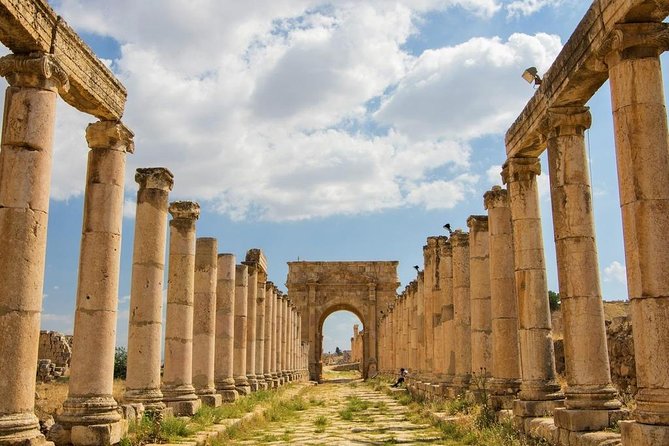
In Jerash, you hit the highlights with context, including Hadrian’s Arch (built in 130 AD), the Hippodrome (made for about 15,000 spectators), the Forum, and the Temple of Artemis area. One detail worth picturing ahead of time is the scale of that temple, where the columns are described as around 12 meters high, and the stone drum weights can be 20 to 40 tons. Even if the numbers don’t mean much before you see them, they explain why Jerash feels so monumental in real life.
After Jerash, you head to Ajloun Castle through a pine-forest and olive grove route. This part is more self-directed. You explore Al-Rabid Castle on your own for about an hour. The tour frames it as a 12th-century castle linked to one of Saladin’s lieutenants during the campaign against the Crusaders. Practical note for you: castles are easier to do without a guide when you can just climb, look, and read any signage.
Then comes Umm Qais, near the border area with Israel, with big views across the Golan Heights and the Sea of Galilee. It is another self-paced stop, but it is designed to be manageable. The ruins are described as easy to navigate with information boards in place, so you are not left totally guessing.
One very real value of this day: you get variety. Roman grandeur in Jerash, medieval fortress views in Ajloun, and then a New Testament-linked site in Umm Qais, described as the location where Jesus cast out demons and sent them into pigs. Even if you are not visiting for religious context, the mix of locations gives you a sense of Jordan as a crossroads.
On the Kings Highway to Petra: mosaics, viewpoints, and medieval walls
Day 3 shifts you south, and the route matters. The tour takes you along the Kings Highway, a historic travel corridor you can still feel in how the stops are placed.
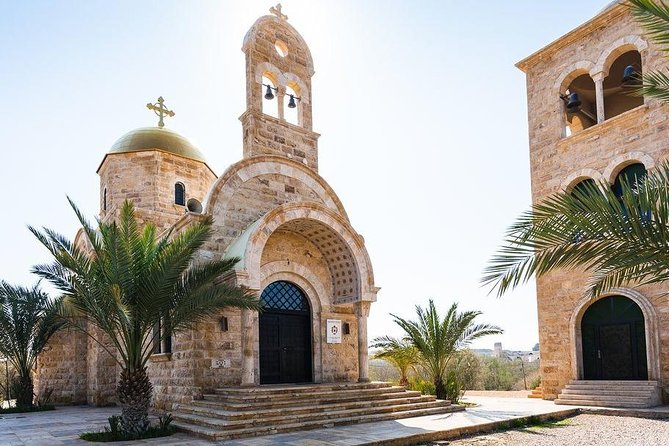
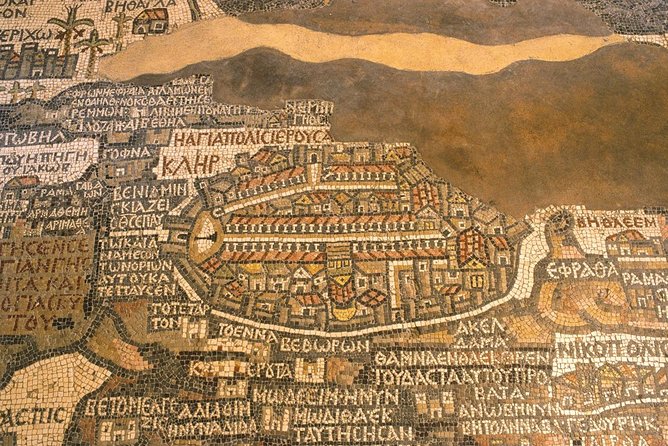
First up is Madaba, famous for Byzantine and Umayyad mosaics. The standout is the 6th-century Mosaic Map of Jerusalem and the Holy Land, inside the Greek Orthodox Church of St. George (the church dates to 1896 AD over earlier Byzantine remains). The mosaic is described as using around two million pieces of vividly colored stone, which is exactly the kind of fact that makes you slow down once you see it.
Next you get a stop at the Wadi Mujib viewpoint, often compared to the Grand Canyon of Jordan. The value here is simple: your eyes need a break from monuments. Viewpoints give you breathing room and help you understand the geography that shapes the country.
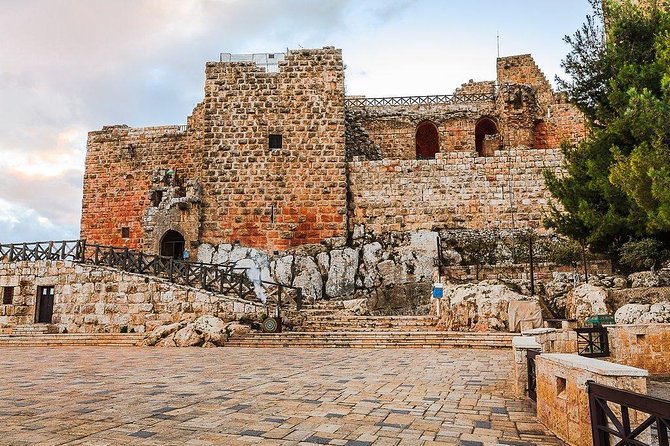
After that, you reach Karak Castle, a Crusader-era fortress built by King Baldwin I of Jerusalem in 1132/34. It is a good contrast to Jerash. Roman ruins are all about civic architecture and long sight lines, while castles are about defense, vantage points, and thicker walls. You get about an hour to visit, which is enough time to see the main structure and take in views.
Finally, there is a Dana viewpoint stop before continuing to Petra. It is brief, but that short pause helps break up the long travel day. If you tend to get restless on bus or car days, these quick scenic stops are not filler. They are what keep your energy steady for the big Petra day ahead.
A gentle caution: because this is a transfer-heavy day, you want to keep water and snacks handy where possible, and plan to settle in emotionally for the fact that part of the day is driving.
Same trip, a different kind of day:
- From Amman: Petra and Wadi rum Full day Tour
★ 5.0 · 538 reviews - 2-Day Petra, Wadi Rum and Dead Sea Tour from Amman
★ 5.0 · 467 reviews - 3-Day Private Tour from Amman: Petra, Wadi Rum, Dana, Aqaba, and Dead Sea
★ 5.0 · 425 reviews - Petra Full-Day Private Tour from Amman
★ 4.9 · 392 reviews
Entering Petra: a guided Siq, then your own time in the city
Day 4 is where Jordan stops being theoretical and becomes physical. You arrive with breakfast, and then you set out for Petra with an English-speaking guide for about 3 hours.
The guided portion starts with the Siq, a 1.2-kilometer chasm leading to the city. Walking it with a guide helps because you see the carvings, tombs, and shrines in a way that makes sense. Without that context, you can still enjoy Petra, but you might miss the “why” behind the sequence of spaces.
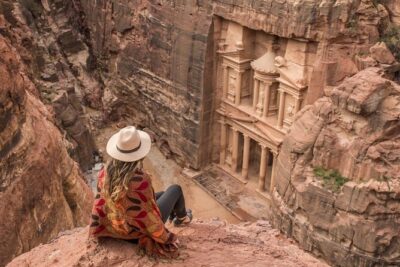
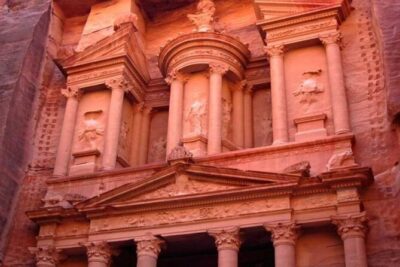
Then you reach the Treasury as you exit the Siq, and from there the guide covers major spine sights such as the Street of Facades, Roman Theatre, and Colonnaded Street, ending the guided tour at Qasr Bint. This ending point matters. You are not forced to sprint through Petra with your guide. Instead, you get free time to explore the rest at your own pace.
During your independent time, the tour points out options like the Byzantine Church and the Temple of the Winged Lion, plus two popular climb choices. You might climb the 800 steps to the Monastery, or take the shorter climb to the High Place of Sacrifice.
Here is how I would think about it for you. The 3-hour guided block gives you the map in your head. Then the free time lets you decide how hard you want to work. If you are short on energy, you can stay closer to the core. If you want that big payoff, those climbs are what people remember later.
Practical tip: wear shoes that handle uneven stone, and bring a light layer even if it looks warm. Petra can feel cooler in shaded sections, and walking a lot makes your body temperature swing.
Little Petra to Wadi Rum: from Nabatean dining rooms to sand dune drama
Day 5 starts with Al-Beidha, also called Little Petra. You transfer for a short block of time, and then you get to see the dining-style Nabatean spaces described as bicliniums and tricliniums, with some of the last remaining Nabatean fresco work on ceilings. This is valuable because it shows Petra’s culture beyond the famous postcard spots. It also gives you a calmer pace before the desert day.
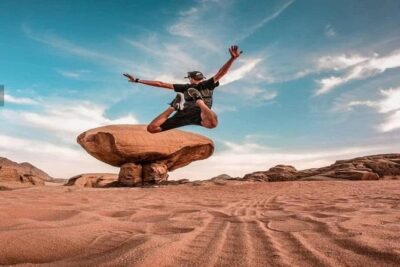
Then it is on to Wadi Rum. You drive there and then the centerpiece is the 4×4 jeep tour, guided by an English-speaking Bedouin guide for about 4 to 5 hours. During the ride you visit a list of classic Wadi Rum landmarks, including the Nabatean Temple, Lawrence Spring, sand dunes, Khazali Canyon, Little Bridge, Um Frouth Rock Bridge, Lawrence House, and the Burdah Rock Bridge or Burdah Arch.
You also get a box lunch during the jeep tour. That detail matters. Desert touring is not the place to rely on finding food at the right time.
On the way back, camel riding is optional for about 1 hour, priced at 10 JD (or about 15 USD) per hour per camel. If you are prone to motion sickness, you may want to sit the jeep portion more comfortably and skip the camel ride. But if you like the experience side, it can be a fun add-on.
That night, the tour includes an overnight in Wadi Rum with a BBQ dinner and breakfast. This is not just “sleeping somewhere cool.” It is timed so you actually get the desert atmosphere, not just a drive-by. You then move into Day 6 with breakfast and sunrise at the camp.
Bethany beyond the Jordan and the Dead Sea: floating after sunrise
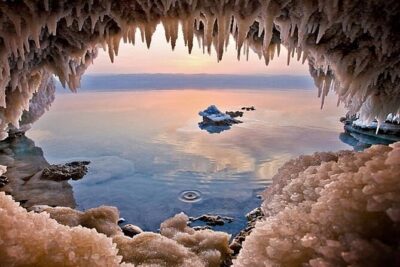
Day 6 starts early, in a good way. You get breakfast and sunrise at the camp in Wadi Rum. Then you meet your driver again and transfer around 3.5 hours to the Dead Sea area.
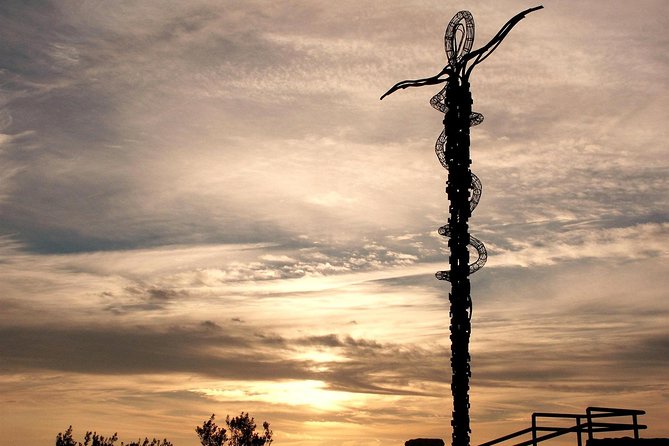
Along the way, you stop at Bethany beyond the Jordan, described as the place where John the Baptist is said to have baptized Jesus in the River Jordan. After that, you continue to your Dead Sea hotel, with free afternoon time.
The biggest payoff is the unique Dead Sea moment: you can enjoy the hotel facilities and the sensation of floating in the Dead Sea. This is the part of the trip where you stop sightseeing and just let the environment do the work.
One consideration for you: the Dead Sea is salty and can be intense on skin and eyes if you are not careful. The tour does not give extra advice here, so use common sense: keep water exposure intentional and protect your eyes.
Hotels and included meals: comfort without wasting the day
This tour is mostly about big places, but the comfort choices add up.
You have two nights in Amman, two nights in Petra, and then one night each at Wadi Rum and the Dead Sea. That means you do not have to repack and travel constantly. When you return from Petra, for example, you are sleeping in the right area for the next day instead of bouncing around.
Meals are also partly handled for you. The tour includes breakfasts at several stops, plus lunch and dinner where listed as included. In Wadi Rum, you get a BBQ dinner and breakfast. For the practical traveler, this reduces the “where do we eat now” stress. It also helps keep your day timing consistent, especially after longer guided sessions.
That said, the tour notes that not all lunches and dinners may be included, specifically those not listed under rate inclusions. So if you have strict dietary needs, it is smart to plan on checking with your coordinator ahead of time.
Transport and guide quality: where the tour really wins
On paper, most Jordan tours look similar: Amman, Jerash, Petra, desert, Dead Sea. What separates a good one from a frustrating one is how it handles time, communication, and transitions.
This tour includes all transfers by modern vehicle with an English-speaking driver (assistant driver). It also includes English-speaking guides for Jerash and Petra, plus an English-speaking Bedouin guide for the Wadi Rum jeep tour.
And based on feedback patterns you will see with Jordan Horizons, the team emphasis is on responsiveness and calm handling of changes. Names that come up include coordinators and drivers such as Aida (helping rework an itinerary), Sulaimon (excellent Amman and north driving), Alla’din (friendly and helpful on the south portion), and coordinator Hicham (known for managing changes quickly with a straightforward yes no problem approach). Other names that appear in feedback include Ali and Wajeeh as part of the professional planning and day-of care.
Even if you never request changes, this kind of team style matters. It reduces friction when you need help with timing, questions, or adapting when weather and daylight affect how you want to pace Petra.
Price and value: what $1,230.77 buys you in Jordan
At $1,230.77 per person, this tour is not the cheapest way to see Jordan. But it is also not an abstract “pay for a name.” You are paying for a bundle:
- Hotel stays: 2 nights in Amman, 2 nights in Petra, 1 in Wadi Rum, 1 at the Dead Sea
- Guides where it counts: English speaking guides in Jerash (1.5 hours) and Petra (3 hours), plus an English speaking Bedouin for Wadi Rum
- Entrance fees: access to the listed sights
- Desert logistics: the 4×4 jeep tour with a set route and a box lunch
- Major transfers: modern vehicle transport across regions
If you were to do this on your own, you would likely spend significant money on vehicles, drivers, and entrance fees. And you might spend more money in time. This tour builds the timing for you so you do not lose hours figuring things out, especially around Petra and Wadi Rum.
Group discounts are mentioned as a feature too, which helps if you are traveling with others. Also, it is a private setup, so you are not sharing your day with strangers unless your group grows.
Who should book this tour, and who should tweak it
This tour is ideal if you want a “best of Jordan” trip that still feels flexible once you are on-site.
You will enjoy it most if:
- You like big highlights but do not want to plan every connection
- You want an English-speaking guide for Jerash and Petra to make the walking time count
- You want a smooth desert experience with a proper jeep tour and Bedouin guidance
- You care about comfort, with the hotel plan set for 6 nights across key areas
You might rethink or adjust if:
- You dislike long drives. Day 3 and Day 6 are transfer-heavy.
- You want fully structured daily guidance. Some stops are self-paced, including Ajloun Castle and Umm Qais.
- You have very limited mobility. Petra includes lots of walking, and the tour suggests optional climbs like the Monastery with 800 steps.
Should you book this 7-day Discover Jordan tour?
If your goal is to see Petra, Wadi Rum, and the Dead Sea without turning your vacation into a logistics project, I think this tour is a strong bet. The value comes from stacking guided time where it matters, handling entrance fees, and using hotel bases so you are not constantly relocating.
My final advice is simple: decide how you feel about walking and driving. If you are comfortable with long days and can handle a lot of steps and uneven ground in Petra, you will likely come away with that rare mix of wonder and ease. If you prefer slower travel, consider trimming the number of movement-heavy days or asking for pacing tweaks before you go.
FAQ
Is this tour private or shared?
This is described as a private tour or activity. Only your group will participate.
What cities and regions does the itinerary cover?
It covers Amman, Jerash, Ajloun, Umm Qais, Madaba, Karak, Dana viewpoint area, Petra, Little Petra, Wadi Rum, and the Dead Sea region including Bethany beyond the Jordan.
Are there English-speaking guides during the key sightseeing days?
Yes. The tour includes an English-speaking guide in Jerash for 1.30 hours and an English-speaking guide in Petra for 3 hours. The Wadi Rum jeep tour also uses an English-speaking Bedouin guide.
What is included for Wadi Rum?
You get a 4×4 jeep tour in Wadi Rum for about 4 to 5 hours with an English-speaking Bedouin guide, plus a box lunch during the jeep tour. Camel riding is optional on the return, at 10 JD or 15 USD per hour per camel.
Is Petra guided or self-guided?
It is guided for about 3 hours with an English-speaking guide, walking through the Siq and covering major areas. After that guided portion ends at Qasr Bint, you have free time to explore on your own.
What about meals during the trip?
The tour includes lunches and dinners and includes breakfasts at the hotels (listed as breakfast for 6). It also notes that dinners and lunches not listed under rate includes are not included.
Are entrance fees included?
Yes. Entrance fees to all sites & sightseeing are included.
How physically demanding is the trip?
The tour states travelers should have a moderate physical fitness level. Petra involves walking and the itinerary mentions optional climbs, including an 800 steps route to the Monastery.
What if weather is bad?
The experience notes it requires good weather. If canceled due to poor weather, you will be offered a different date or a full refund.
Newest tours listed in Amman
- Queen Alia Airport Transfers From / To Amman, Petra, Dead Sea.★ 5.0 · 3 reviews
- From Amman :Private full day tour to Jerash ,Ajoune and Um Qais★ 5.0 · 12 reviews
- 2-Day Private Tour in Jordan – Deluxe Tent★ 5.0 · 9 reviews
- FROM AMMAN | Petra & Wadi Rum in one day | The Jordanian Mappers★ 5.0 · 12 reviews
- airport pick up & transportations Services★ 5.0 · 15 reviews
- Dead Sea Half-Day Tour from Amman★ 5.0 · 8 reviews
- From Amman to West ( Madaba, Mt Nebo, baptism site and dead sea)★ 4.0 · 5 reviews
- NEOM Saudi Arabia Transfer from AMM Airport or Aqaba Airport AQJ★ 5.0 · 3 reviews
7-Day Experiences, compared.
7-Day Private Tour in Jordan: The Treasures Map
Read our review →
7 Days – 6 Nights Jordan Private Luxury Tour All Inclusive
Read our review →
Browse the lists this tour appears in